Marvel comics of 1993. We talk the return of Frank Miller to Daredevil The Man Without Fear
Podcast: Play in new window | Download
Subscribe: Apple Podcasts | Spotify | RSS
[Read more…] about 1993 Pt. 5: Daredevil The Man Without Fear!
Reading Order Guide For Beginners & Fans
Marvel comics of 1993. We talk the return of Frank Miller to Daredevil The Man Without Fear
Podcast: Play in new window | Download
Subscribe: Apple Podcasts | Spotify | RSS
[Read more…] about 1993 Pt. 5: Daredevil The Man Without Fear!
The Joker has undergone significant change over the course of his history, but one thing that a lot of modern fans might not know is that he was genuinely terrifying dating all the way back to day one. His first appearance in Batman #1 makes no qualms when it comes to portraying him as a remorseless killer, taking the haunting visual imagery from director Paul Leni’s silent masterpiece The Man Who Laughs (1928) and twisting the once-heroic jester portrayed by Conrad Veidt into a murderer with a penchant for elaborate showmanship.
In the comics of the mid-’50s, the Batline had been steered away from the occasionally grisly content of the early days towards more family-friendly fare in response to the birth of the Comics Code. Likewise, the campy fun of Batman ‘66 had become the definitive take on the character in popular culture. Regardless, the Joker has more or less remained a horror across the decades, and when writers began once more to embrace mature themes, he was one of the first to step up the brutality. The Joker: Clown Prince of Crime
Discusses The Joker: Clown Prince of Crime #1-10 [Read more…] about The Joker’s “Last” Laugh In The Clown Prince Of Crime
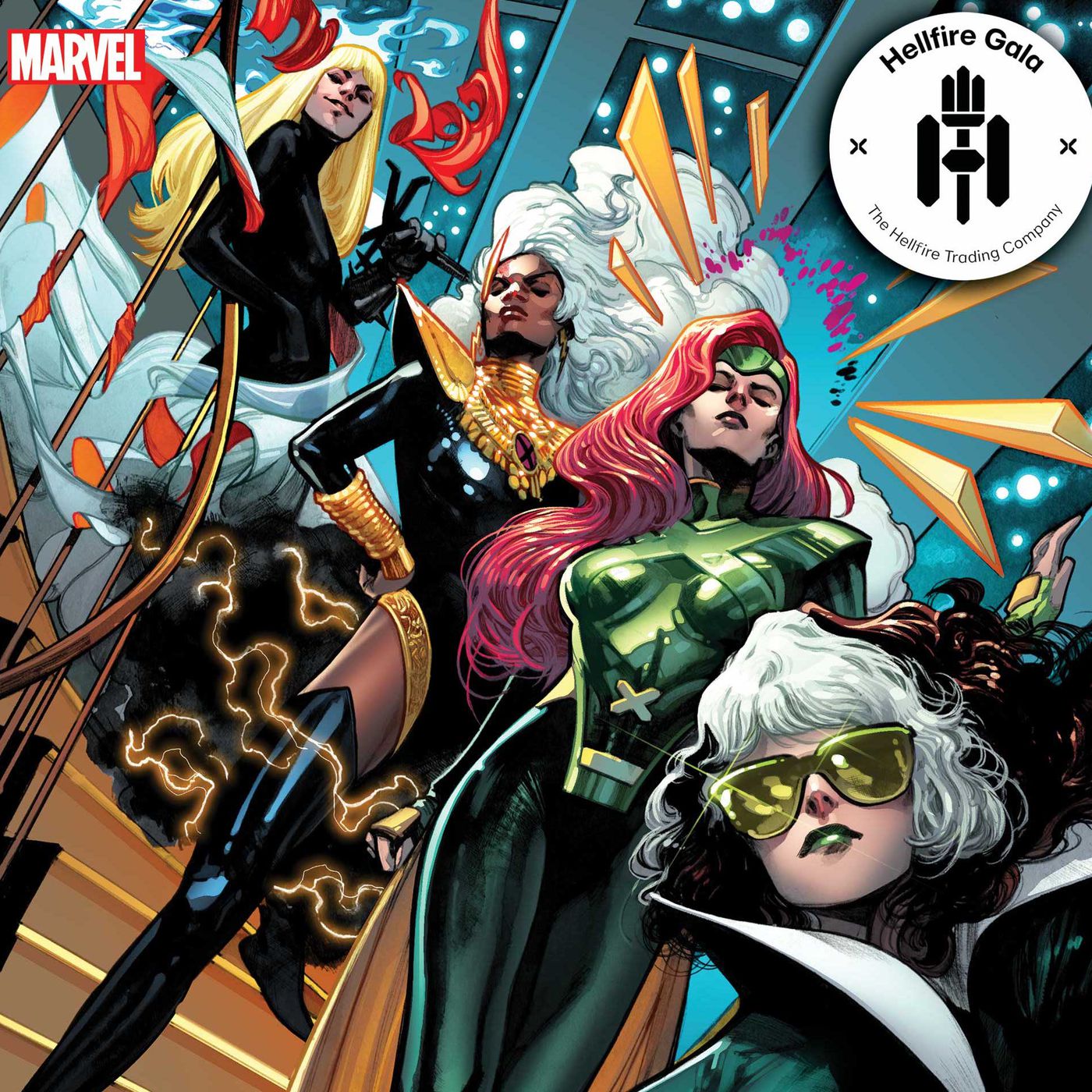
X-Men: Hellfire Gala
The true test of a great party is who’s there. Are the conversations worth having, can you gossip about the elbows you rubbed, who hooked up with who? The X-Men have just had their most ambitious party yet, a night to remember now collected in X-Men: Hellfire Gala, courtesy of the entire X-line. Rather than serving a single story, this trade is a sampling of the various series in the line – a snapshot of the Krakoan era in the summer of 2021, and a hint of things to come. Let’s look at the guest list to see how it stacks up, and if this is really my scene. [Read more…] about X-Men Hellfire Gala: “Should I Stay or Should I Go?”
After the pandemic-impacted 2020, Marvel’s 2021 is slowly but surely back on track, with a wide variety of excellent comics. All in all, it’s a good time to be a Marvel fan, and I’m listing out my favorite picks for those looking to dive in.
It’s an interesting year for Marvel, three years after the launch of the “Fresh Start” era, as some of the line’s biggest titles (Black Panther, Immortal Hulk, Venom, & on a technicality, Jonathan Hickman’s X-Men) wind down throughout the year. Even with that turnover, “Fresh Start” is heartily sustained through the Krakoa era of X-Men, an exciting new Marvel Space Age, and a healthy variety of quality throughout the broader universe. Honestly, even some of the big time runs I’m least enthused by (Jason Aaron’s Avengers and Nick Spencer’s Amazing Spider-Man) are remarkably consistent, and offer plenty of intriguing moments. It’s a truly good time to be a fan of Marvel Comics. [Read more…] about The Best Marvel Comics of 2021!
“We must make tomorrow happen today.”
Mutantkind has taken a giant leap forward, and the nation of Krakoa is more powerful than ever before. But as divisions grow both inside and out, how will the nation continue to evolve? And who will shape the next chapter in the species’ history?
Under head writer Jonathan Hickman, X-Men and its sister titles became the story of Mutantkind realising its full potential; transcending violence, scarcity, and death itself by uniting into a single sovereign nation. And after conquering their shadow-selves in the mystic X of Swords Tournament, the species is more driven than ever to expand what they’ve built, building Krakoa into an empire with galactic reach. To forge this new chapter, the X-Line would add creators Al Ewing, Vita Ayala, Si Spurrier and more to an already impressive roster, further elevating Hickman’s vision into a galaxy-spanning cosmic opera. [Read more…] about Reign of X: The X-Men’s Empire Evolves!