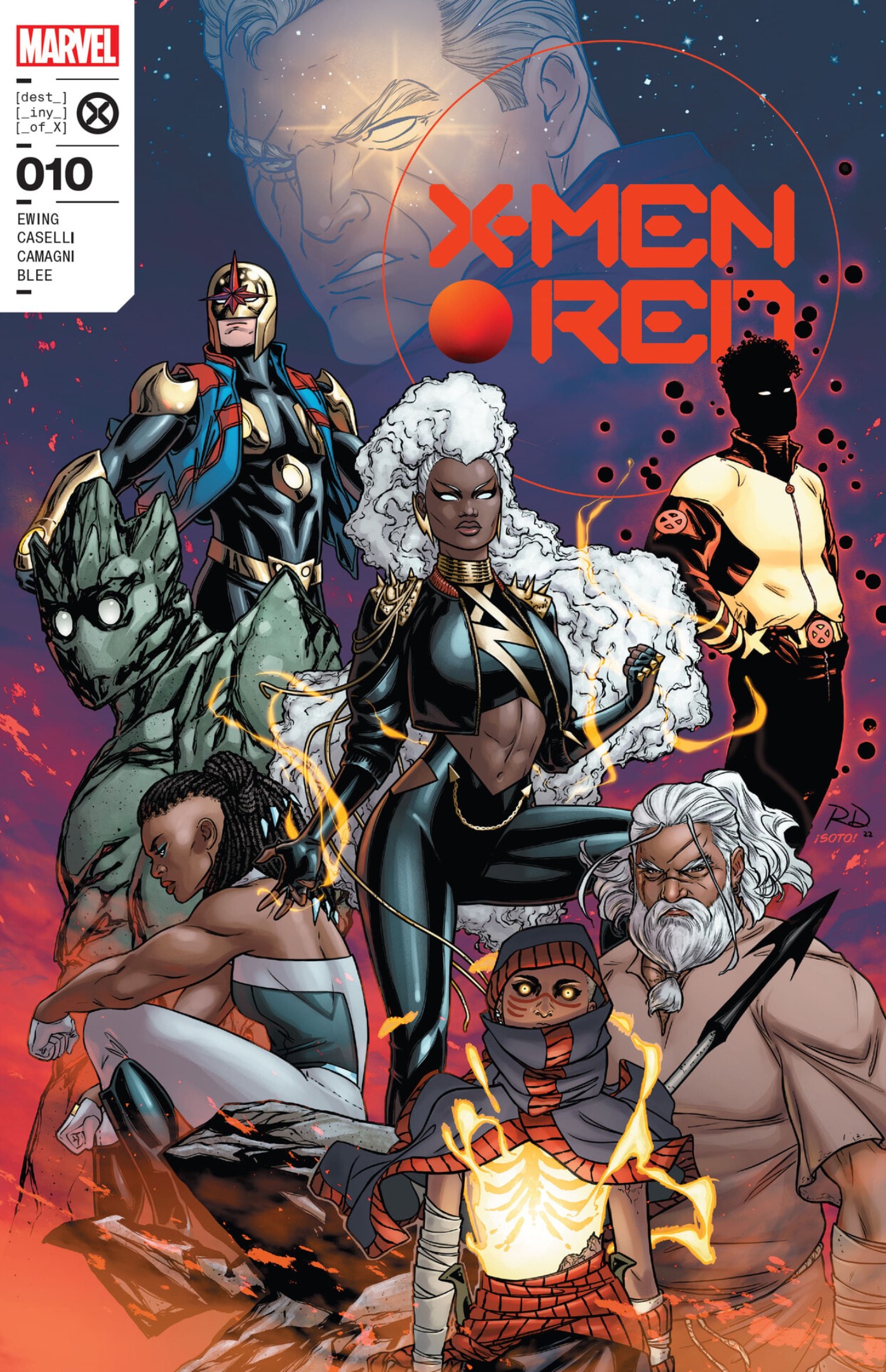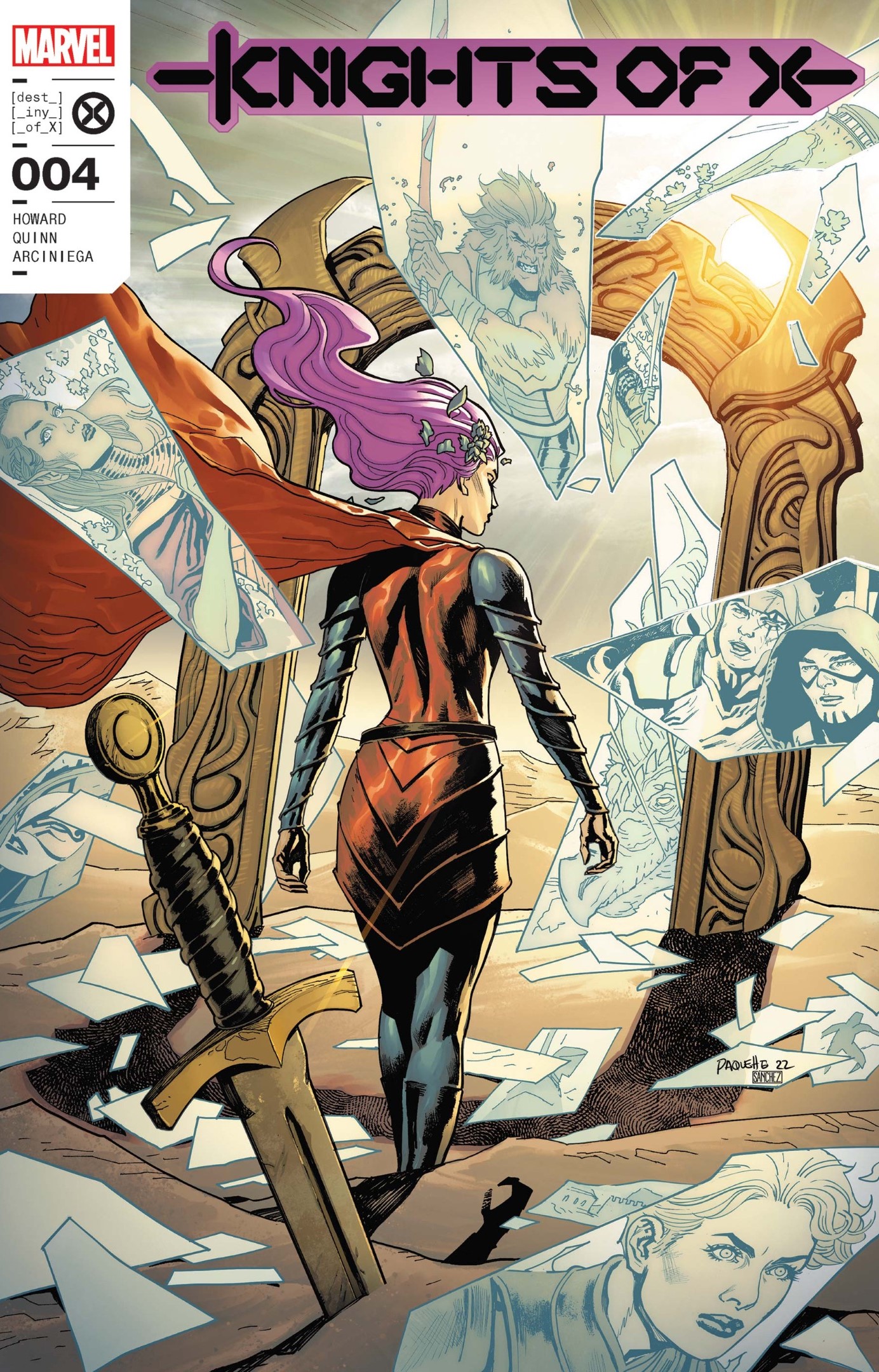
Dave and Charlotte take on the X-Men crossovers Apocalypse: The Twelve and Ages of Apocalypse!
Podcast: Play in new window | Download
Subscribe: RSS
A Comic Book Reading Order Guide For Beginners & Fans
Dave and Charlotte take on the X-Men crossovers Apocalypse: The Twelve and Ages of Apocalypse!
Podcast: Play in new window | Download
Subscribe: RSS

In my previous Omnibussin piece, I charted the ways Marvel could collect Black Panther’s comics from the mid-70s to the mid-90s in omnibus format. It was a complex process, despite T’Challa not having too many comics to his name back then… or perhaps because of it! With the entire piece dedicated to that era, I promised I’d return to cover the modern material, which is—as is often the case—quite a bit easier. As I teased last time, however, though modern collections tend to focus on a single author or run and are thus much more easy to envision, there are a few surprises left.

Everyone knows Virgil Hawkins, or Static, from the Static Shock TV Show, but some (like me before writing this guide) might not know his history with Milestone Media. It was made by black creators who wanted a universe with black and more diverse heroes, and they nailed it. The comics discussed problems of the time – many that we still have today to some degree – and had characters of different ethnicities, nationalities, and sexualities, but that weren’t only defined by them. They were so much more. Unfortunately, it wasn’t enough to guarantee great sales.
Most of these stories were set in Dakota, making the universe also called the Dakotaverse. Virgil lives in Dakota and gained his powers during a gang fight there; making him a “Gang Baby,” what the people who obtained powers because of the fight are called. His best run by far is the original Static by Milestone, but he also has stories in the main DC Universe and the new initiative, Milestone Returns.
Since I was younger, I’ve loved Static; Virgil has all the great traces of the greatest teen heroes: he’s powerful, your age, and funnier than you. But what the comic does best is making him heroic and human. The chapters try to bring discussions, but it’s not a message you have to understand at the end, the characters are literally talking about it. Virgil, and many of the characters featured, seem like real people, with complex opinions and personalities. That’s something I really hope the newer comics manage to do too; it’ll definitely be great.
It is often said that Watchmen is the most influential comic ever to be released. That comics wouldn’t be where they are without it, for good and for ill. But how did we get here, exactly? More to the point, just what influence did Watchmen provide to the larger world of comics? What, ultimately, is the legacy of Watchmen? Who watched the Watchmen?
“I’ve got a nose for white supremacy and he smells like bleach.” ~ Angela Abar
Watchmen, the 1986 twelve issue DC miniseries, as written by Alan Moore, illustrated by Dave Gibbons, and colored by John Higgins, is a comic self-consciously about comic books. The comic explores and challenges the implications and consequences that accompany the existence of superheroes – stars of the most dominant genre of comics in the Anglosphere then and now – and uses them to explore contemporary concerns about the cold war, Reaganism, and nuclear annihilation. Its grid based layouts, mirrored chapters, and non-linear character perspectives calls attention not just to the comic book’s constructed nature, but the ways in which it was constructed and how we engage with and read them.

This essay, both a review of Immortal X-Men #6* and an excursus on erstwhile C-lister Exodus now reborn under Kieron Gillen’s absolutely brilliant stewardship, is a pendant piece to our “A.X.E.: Judgment Day” reread here at CBH—following the introductory entry and the first deep dive on the event’s early chapters.
*Credits: Kieron Gillen writes; Michele Bandini draws; David Curiel colors; Clayton Cowles letters.
Black Knight: Exodus* credits (1996): Ben Raab writes; Jim Cheung pencils; Andy Lanning inks; Tom Zuiko colors; Richard Starkings letters (*This one-shot discussed extensively below).
So—wow, a whole article on Exodus? That Crusading bigot? Welllll—let’s start by risking minor controversy and say not every soldier on Crusade a thousand years ago was necessarily any one thing. After all, do we judge each person enlisted in the US imperial armed forces as a dyed-in-the-wool imperialist and racist? If we’re going to immediately judge the ancient Grand Duc Bennet du Paris as a racist zealot, we need to think about how we in the modern West view ourselves and those around us: Do we or our enlisted, one and all, need to be subjected to the same blanket judgment? That word, obviously, couldn’t be more apropos here with this most literal of apocalyptic events under discussion. Isn’t much of what Gillen’s done with this event encouraging us to think about how we judge ourselves and others—and humanity, generally?
[Read more…] about The A.X.E.: Judgment Day Reread: Exodus—The Immortal X-Man