This month’s new graphic novels features 2 DC superhero titles, 3 2020s Manga runs among my favorites of the decade, and one written by a musician whose concert I very drunkenly attended in 2011!
To get these picks sent directly to your mailbox every month, sign up here for free.
To see the full year’s list, check out the best comics of 2026 (updated monthly!).
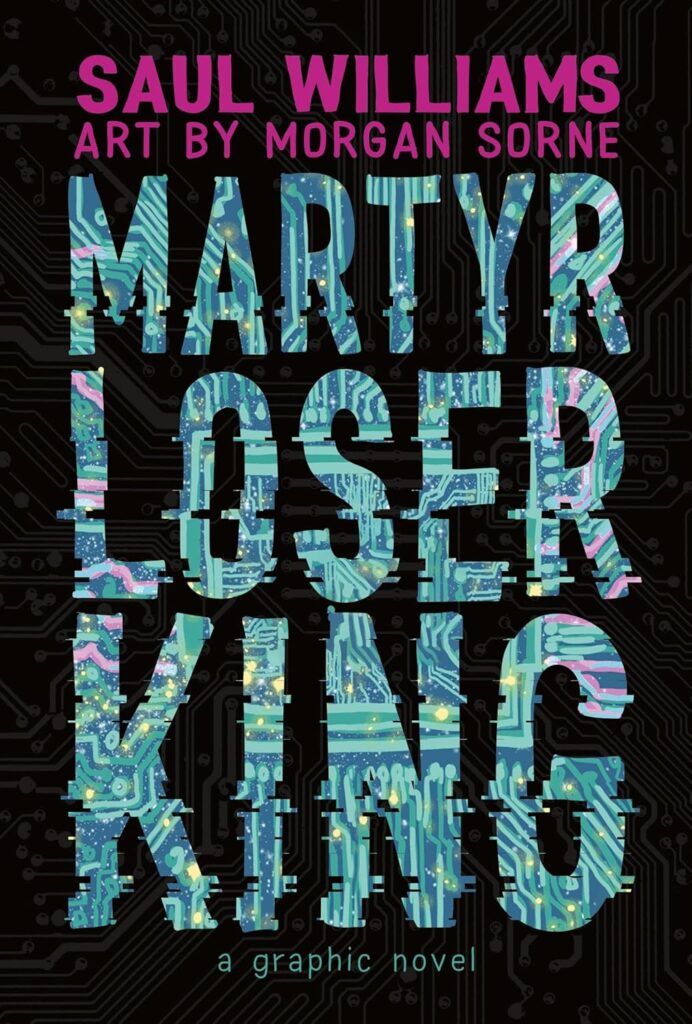
Poet, activist, actor and musician Saul Williams was one of my first great teachers on race, as his Trent Reznor collaboration “The Inevitable Rise and Liberation of NiggyTardust” peeled my eyelids open in 2007 (it remains one of my favorite albums). Williams has an inimitable voice and way of speaking truth to power – I dare anyone unfamiliar to queue up “List of Demands (Reparations)” or “Burundi” on your car speakers without hitting 135 mph by the song’s midpoint. Over the past decade, Williams’ fascinating career – from Slam! poet to indie-rap mainstay to the Preacher in Sinners – has largely concentrated around building out the MartyrLoserKing mythology, first on 2016’s underrated album of the same name, then via the “Neptune Frost” film and soundtrack, and now with his debut graphic novel, Martyr Loser King.
Alongside artist Morgan Sorne and 23rd St. Books, Williams gets to consolidate his themes into one graphic novel, centered around modern exploitative coltan mining in Africa, but expanding outward on themes of colonialism, systems of power, and the philosophical import of the “unanimous goldmine” of human worth. Sorne is a superstar bringing this work to life, with a shockingly flexible command of the required aesthetics to visualize such an ambitious free-flowing narrative. Sorne slides between traditional black-and-white comics framing and cosmic explosions like an artist possessed by a higher power, preventing the work from drowning under the weight of Williams’ ambitions. Unsurprisingly, Williams’ approach to fiction is poetic, meditative, and wholly unafraid, to the point that it’s not hard to imagine an artist getting completely overwhelmed in the process. Sorne somehow retains control – it’s what keeps this work afloat.
I’ll admit that near the midway point I checked the credits to see if Martyr Loser King had an editor (it does! Mark Siegel, founder and creative director First Second!). Artistically, I get Siegel’s desire to keep Williams’ vision pure. As a reader, though, I feel it needs guidance and shaping to retain a more penetrable core. Honestly, it reminds me a lot of Grant Morrison’s least compromising works – for example, The Filth – where the creator sees a high-minded vision so clearly they lose all sight of translating – not watering down, but *translating* – that discovered alien tongue for an audience (Shades here, too, of Russell Hoban’s Riddley Walker, where a college course full of annotations is effectively required). Sometimes that’s where the magic happens; often, though, I fear it will simply create too many new bald-spots from head-scratching.
If I wanted to be snarky, I’d say “What it lacks in comprehensibility it makes up for in length,” but I don’t want to be snarky. Marty Loser King is an authentically uncompromised vision brought to life by two gifted artists. What are graphic novels for if not that?
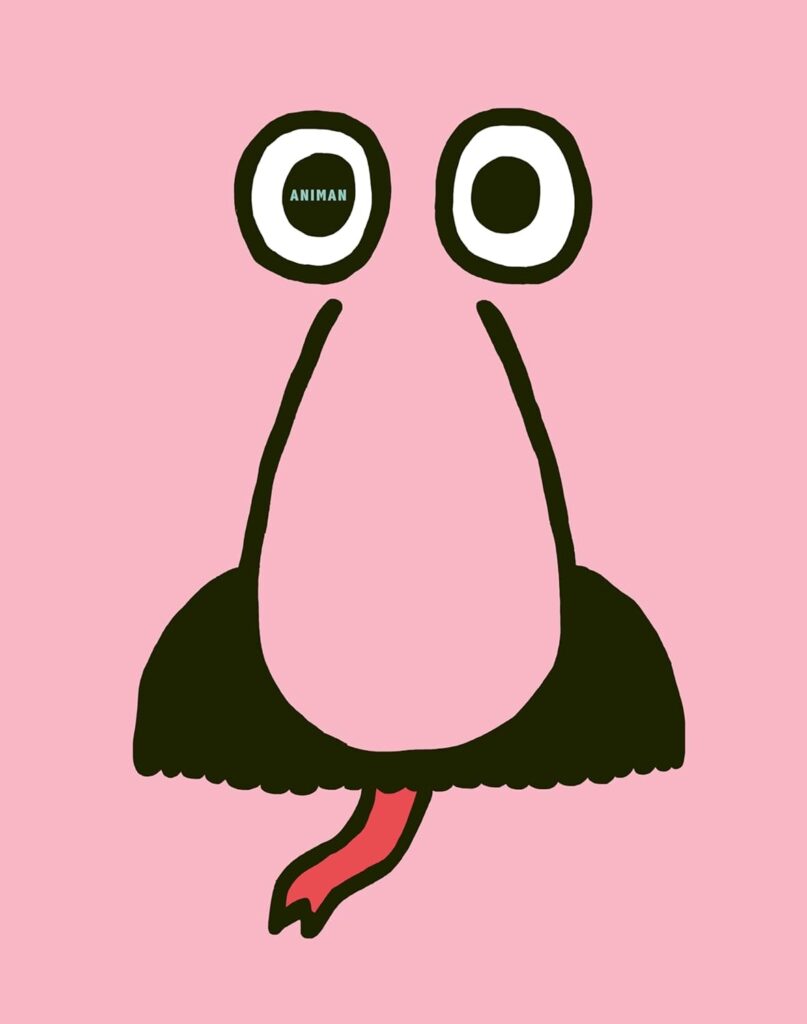
Anouk Ricard’s award-winning Animan is a strange beast, 88% kid-friendly comics strip, 8% arthouse experiment, and 4% boobs and full-frontal. Translated from the original French to English by Montana Kane and Drawn & Quarterly, Animan is a human pet detective who can transform into and speak with any animal at will. He’s married to a frog (Fabienne), his nemesis is Objecto (who can turn into any object at will!), and he solves pet-crimes. It’s cute!
I’ll admit there’s a pretentious part of me that kept waiting for Animan to elevate to the same wavelength of Cornelius: The Merry Life of a Wretched Dog – Ricard’s cartooning and vision is so strong it feels like she could simultaneously offer a layered satirical commentary – but this simply ain’t that kind of book. Sometimes a duck is a duck! Or, a frog is a frog? Mixed metaphors aside, Animan is a very fun riff on superhero comic strips. Just note, this is very much not the same book as Yen Press’ Animan manga!
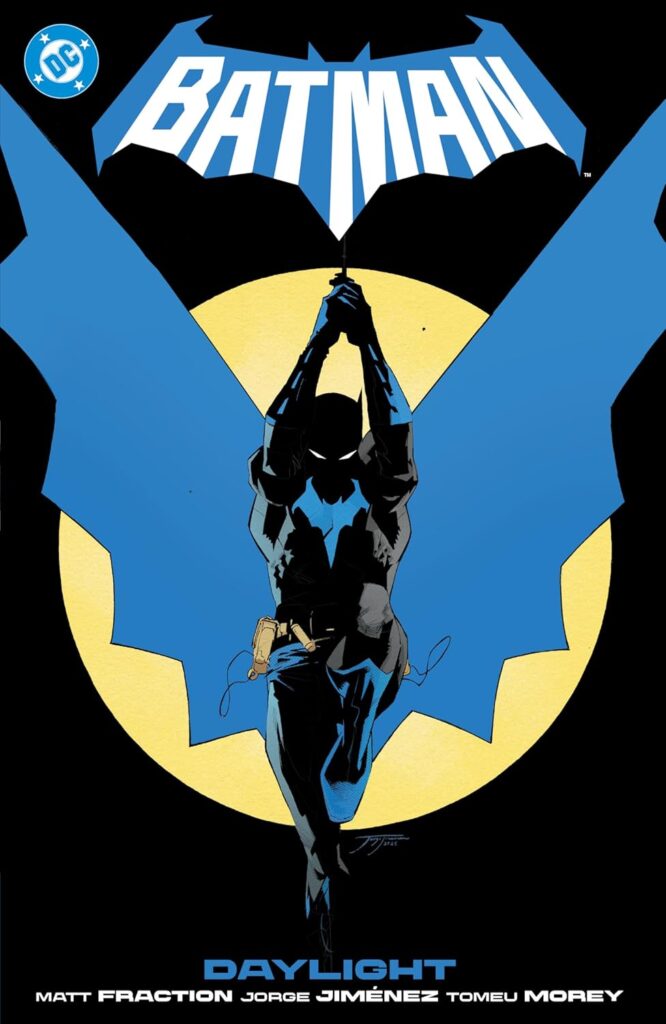
Batman by Matt Fraction and Jorge Jimenez Vol. 1
In the age of Absolute Batman, it’s hard not to feel skeptical about a ‘normal’ Batman run, even by creators as accomplished as Matt Fraction and Jorge Jimenez (Jimenez in particular is so damn good at Batman he’s survived – and at times carried – runs by an unheard of 3 different superstar writers (Tynion IV, Zdarksy and now Fraction).). When Nick Dragotta, Scott Snyder and friends are delivering such a thrilling boundary-pushing reimagining of the Bat, of what use is the relic? Can it become a heavyweight champion again?
Considering Fraction’s superhero glory days are decidedly in the past (by choice), I had to imagine a journey to Gotham came with big ideas and an angle. Crucially, Fraction doesn’t overreact to Absolute with an overwhelming high-concept shift, and instead is carefully finding his footing with a compelling approach. Through six issues, the clearest mission statement is a bit “back to basics” (a Vandal Savage led GCPD hunts the Bat a la Year One), and an interrogation of Gotham’s cycle of violence and incarceration (perpetuated by Batman). Every issue is “standalone,” although there are clear tethers being built, and when Batman does encounter the classic supervillain set (Killer Croc, Riddler, Anarky), they’re all psychologically more broken than usual. Batman still punches literally all of them, but “most” of the interactions are conservations trying to understand and maybe, just maybe, help them. (How helpful is it to have a chat with a man who just broke your jaw? A valid question).
As it’s been for the entire decade to date, Jimenez provides the accelerant that takes been-there-done-that Bruce Wayne dates interrupted by ninja assassins to new heights. I can understand, and in some ways align with readers who would have preferred a more immediate status quo shift. Fraction and Jimenez’s seven-fingered Minotaur crime boss does feel a LOT like the Tynion IV era Designer. Nonetheless, the pacing (near “one-and-done” style issues) and visual acuity (hot DAMN Jimenez and colorist Tomeu Morey emphasizing the Garcia-Lopez inspired light blues of Batman’s cape) are keeping this on my superhero comics to keep up with.
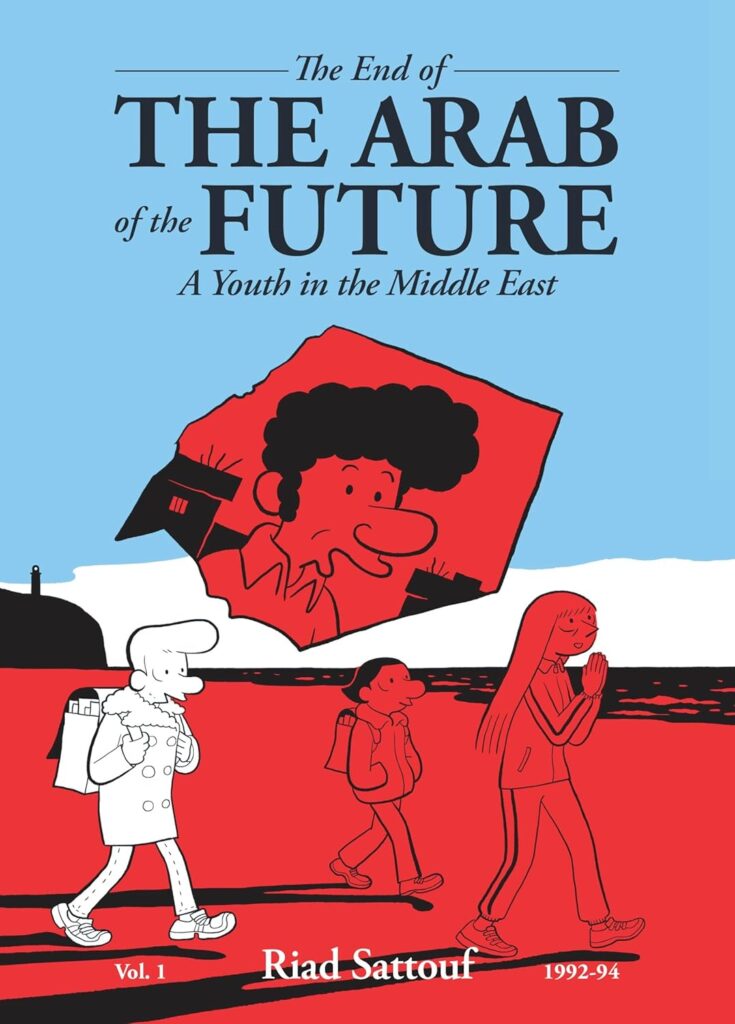
The End of the Arab of the Future: A Youth in the Middle East Vol. 1
Talk about jumping into the deep end of the pool before you’ve learned to swim! I saw the Volume One on this Fantagraphics’ edition and assumed this was the starting place of a series called “The End of the Arab of the Future.” Come to find out French cartoonist Riad Sattouf’s “The Arab of the Future” has been winning awards since 2015, and this is quite literally the end of a now six volume memoir detailing the cartoonist’s childhood spent in Libya, Syria and France. It’s a skillful graphic memoir that is drawing Maus and Persepolis comps, so take any big picture rankings here with a grain of salt – I need (and plan) to read the whole work!
Volume One of “The End” (of a planned two volumes) captures Sattouf’s high school years in Northwest France in the early 90s (Nirvana is a major player). The work opens with Sattouf’s Arabic father running to Syria with the family’s youngest son, Fadi, and much of the work focuses on the family’s struggles to see Sattouf’s brother returned to his mother and siblings. Despite that terror, Sattouf’s cartooning and tone are surprisingly light on their feet.

Yan provides this month’s lesson in the value of sticking with it. I read the first chunk of volume one and thought I was picking up what Chang Shang was throwing down – Peking Opera girl framed for her mother’s murder, now on a quest for revenge. Kill Bill by way of an Opera reference I am nowhere near cultured enough to make. A tale as old as time!
Keep reading.
Keep reading.
By the backhalf of volume one and for all of the remainder, Yan becomes a sci-fi explosion of ideas. This is going to be upsetting to a good many readers, but I couldn’t help but think the sheer reckless abandon of Shang must be how readers felt picking up Akira in 1982. Shang’s pedal is always grating against the floor, and even if we’re Fred Flinstoning right off a cliff, it’s exhilarating.
Listen, this kind of 160 mph at all times driving is not without downsides – for most of the book every character speaks like THEY ARE ALWAYS YELLING THE MOST URGENT THING ANYONE HAS EVER YELLED!!! Of course, this is exactly how Jack Kirby also wrote dialog, so who am I to object. Listen, Akira was a little hyperbolic, but Yan definitely reaches early 90s valiant by way of those Frank Miller/Walt Simonson Terminator comics. It’s just a confident, energetic superhero epic and a great time.
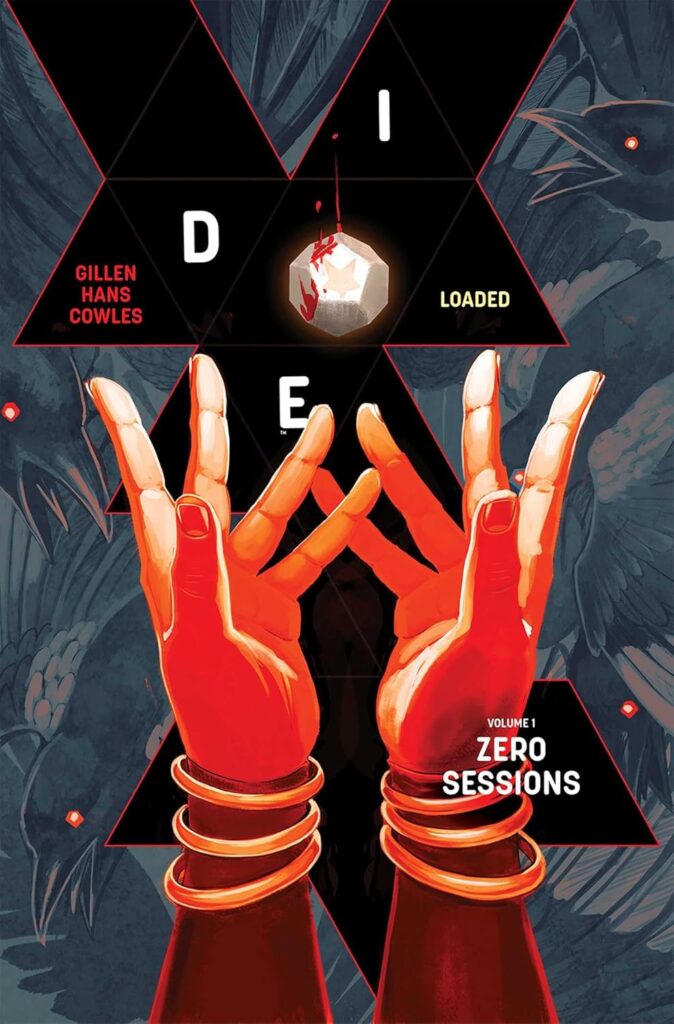
I was thinking about Kieron Gillen and Stephanie Hans returning five years later (Bowie-voice: 5 Years!!!) to the Die-Verse for a relaunched ongoing run, primarily centered around “new” characters, and how unusual that actually is in the history of independent comics. I looked through my 200 favorite comics and the closest examples of great runs that have an “ending” of sorts, only to later return and recapture shades of that glory are Grendel, Astro City, and, leading the pack, Criminal via Brubaker and Phillips. I don’t count the likes of Hellboy or Love and Rockets in this category as those never really seem to end (and thank goodness for us). Matt Kindt’s trying this trick right now with Mind MGMT, but obviously that’s TBD. Probably there are other examples, but the point: It’s unusual!
Of course, if you turn your adventure-goggle settings from comics to RPGs, resetting a new adventure in the same world with new character creations is the name of the game. It’s not surprising that Gillen and Hans haven’t lost a step, but it is fascinating how quickly they transition “Loaded” from the familiar Die crew of Ash and company to the “NPCs” of the original run. It’s not there yet, but it’s not inconceivable that “Loaded” could surpass the original 20 issues. That said, it would be a challenge to recommend the work to someone who hasn’t read at least the first volume of Die (2018 – 2021). It turns out you do need some familiarity with that core rulebook before you launch into gameplay.
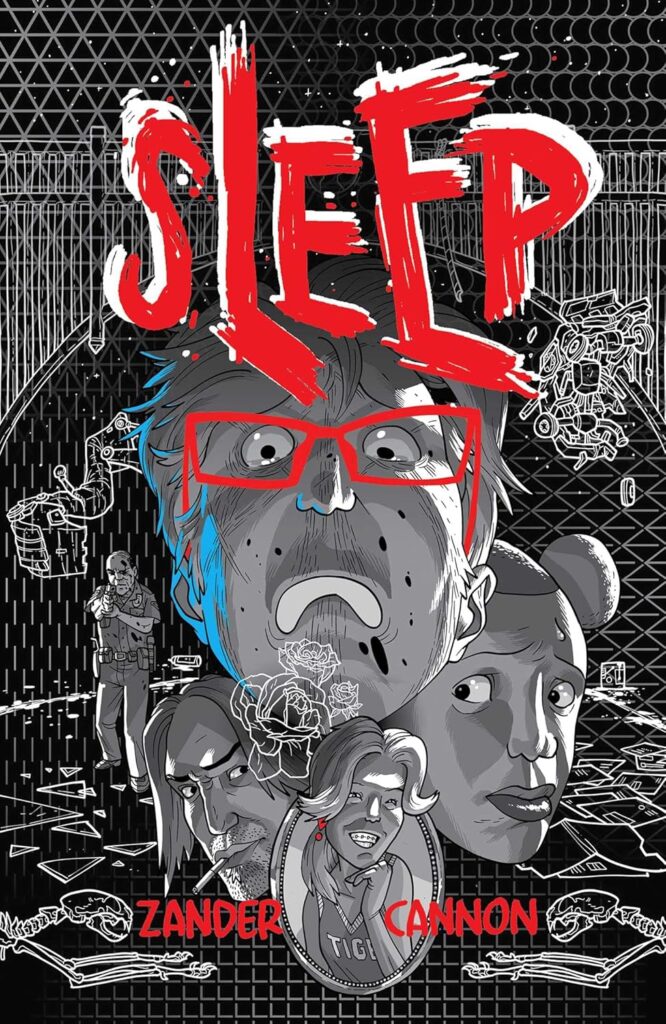
Zander Cannon’s eight issue horror series is a Lynchian werewolf inversion from the exclusive perspective of the morning after the terror. Cannon’s black-and-white (with pointedly deliberate red items) cartooning follows a protagonist in a sleepy, church-going middle American town who wakes up every morning to a new trail of amnesiac destruction. It’s a unique kind of horror comic where the protagonist is increasingly horrified and confused by his apparent murderous outbursts, but life in the small town carries on quietly… normal? It’s not that no one realizes that say, a whole house has been destroyed, but the way they accept this as the norm is bedeviling.
Perhaps this is Cannon’s way of commenting on the size of horror it takes to shake up our day-to-day routines. How many bloodsoaked tracks across our town map before we take real action towards the monster? Either way, it evokes a compelling sense of mystery apart from the obvious Werewolf in the room – what kind of monster are we dealing with here! If you’ve read Cannon’s cartooning on Top 10 or KaijuMax before, you know you’re in for confident, smooth storytelling, with a bit of experimentation baked in here as Cannon moves towards a monster’s eye view in the endgame. Sleep’s an easily gripping graphic novel, making sure you certainly won’t get any until all eight issues are complete.
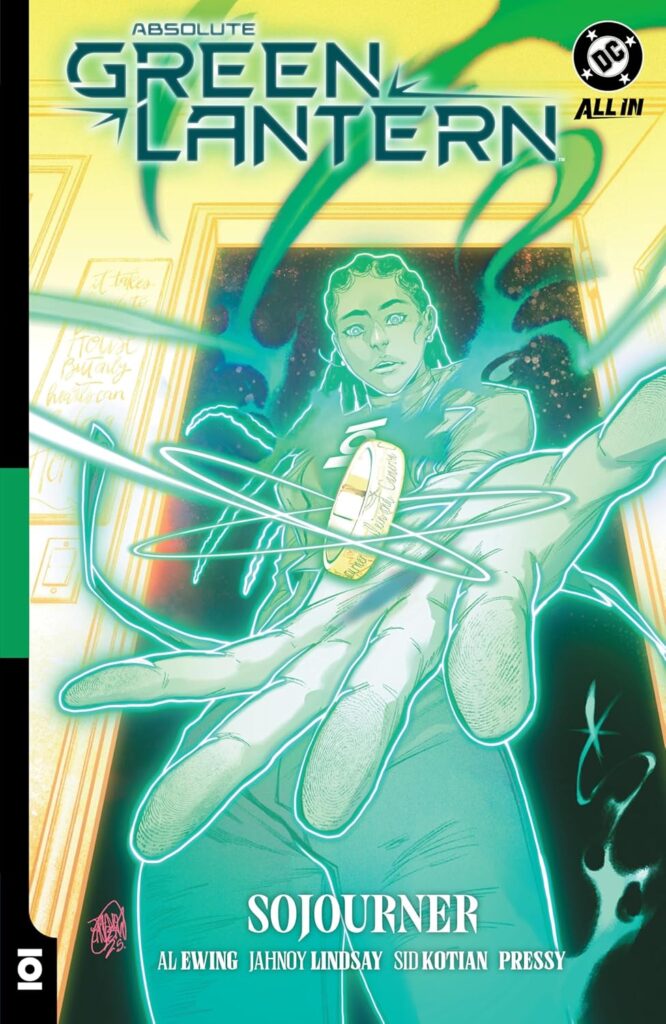
Welcome back, Al Ewing! From 2018 to 2023 there was an argument to be made that Al Ewing was the best superhero comics writer (Immortal Hulk, X-Men Red, SWORD, Guardians of the Galaxy, Defenders), but the ensuing years haven’t quite measured up (thought certainly with Immortal Thor it’s not for lack of trying). Ewing’s an interesting Absolute Universe presence, as he’s practically brand new to DC (not forgetting a quite well liked Metamorpho mini), and because his presence on Absolute Green Lantern with relative newcomer artist Jahnoy Lindsay created a rare imbalance of writer outweighing artist. This is not the Absolute way!
Where volume one was intriguing without the knockout highs of Absolute Batman or Wonder Woman, and quite literally grounded to the Evergreen, Colorado Green Lantern crash site, volume two ascends to the stars, in every sense. Ewing was *born* to reimagine the cosmic emotional light spectrum of the lanterns, and every new reveal and lantern mythology appearance is beyond thrilling. Crucially, this is just the frosting, as the internal study of Jo Mullein, Green Lantern, remains the focus. Ewing digs deep into Mullein’s past, developing queerness, and relationship struggles with Renee Montoya (squee!) and Cam Chase (squeeeee!). It’s as deeply felt as our understanding of any Absolute Universe hero to date.
The biggest question with Absolute Green Lantern is whether Lindsay is up for reaching the bars set by Dragotta, Sherman, Sandoval, Robles, et al. Visually, the work never ascends to the top tier of Dragotta/Sherman, and while strong storytelling, the bar for the Absolute Universe is “Coolest s*** you’ve ever seen in your life.” I don’t make the rules! That’s just the bar! Absolute Green Lantern hasn’t gotten there. Long term, this also might not really be the right question – as Lindsay is entirely absent from what will be volume three. But there’s still a leap this book can make if Ewing finds the right collaborator.
Either way, it’s pretty easily one of my 10 favorite ongoing superhero comics, and my third favorite Absolute comic.
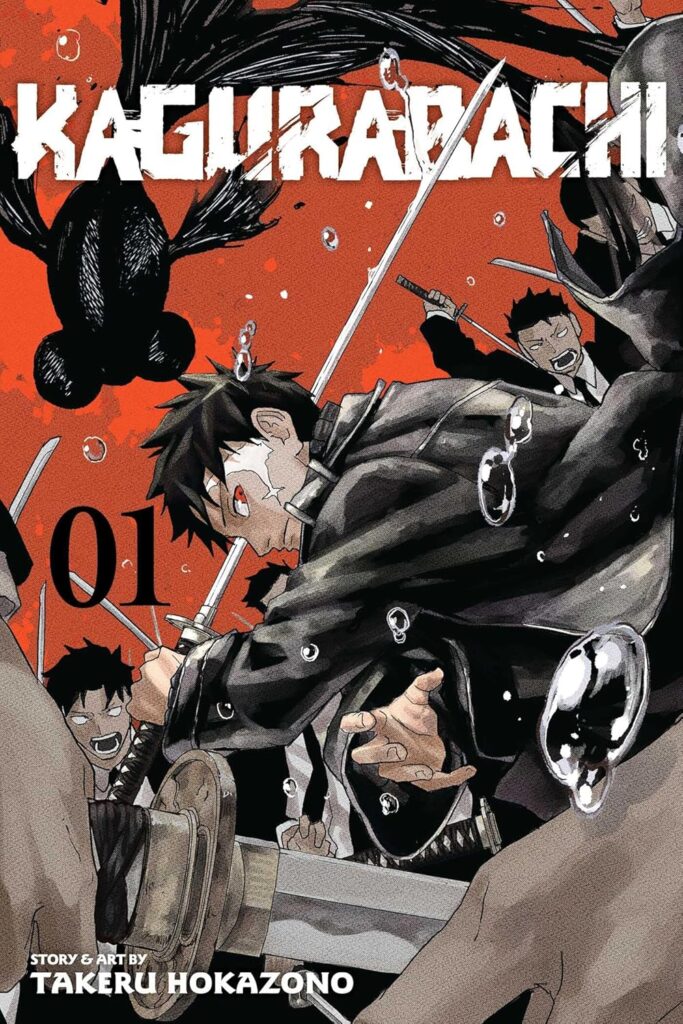
In my quest for the best new-ish manga of the 2020s, there are two titles that come up more than any other: Kagurabachi and Gachiakuta. I’m mostly caught up through English releases on both, and for my money, Kagurabachi by Takeru Hokazono is the clear winner. The Shonen samurai hit checks off all the “Gonna be a hit anime in 2027” boxes with Dragon Ball questing, video game logic hunting for enchanted swords, and striking action visuals (shy of Fujimoto’s bar, but that’s why it’s the bar to clear). Hokazono isn’t reinventing any wheels here (RIYL Blue Samurai), but the earnest dedication to a magic system layered on top of the classic ronin revenge narrative is consistently a blast.
Through seven English volumes, I’m most impressed how easily Hokazono launches into extremely compelling new arcs, shifting from enchanted sword questing to supernatural sorcerer auctions to a reveal of the actual enchanted sword-bearers. I’d put Kagurabachi on par with the easy bingeability of Kaiju No. 8, Dandadan, or Choujin X, and recent moments – CROW – suggest Hokazono is only getting better.
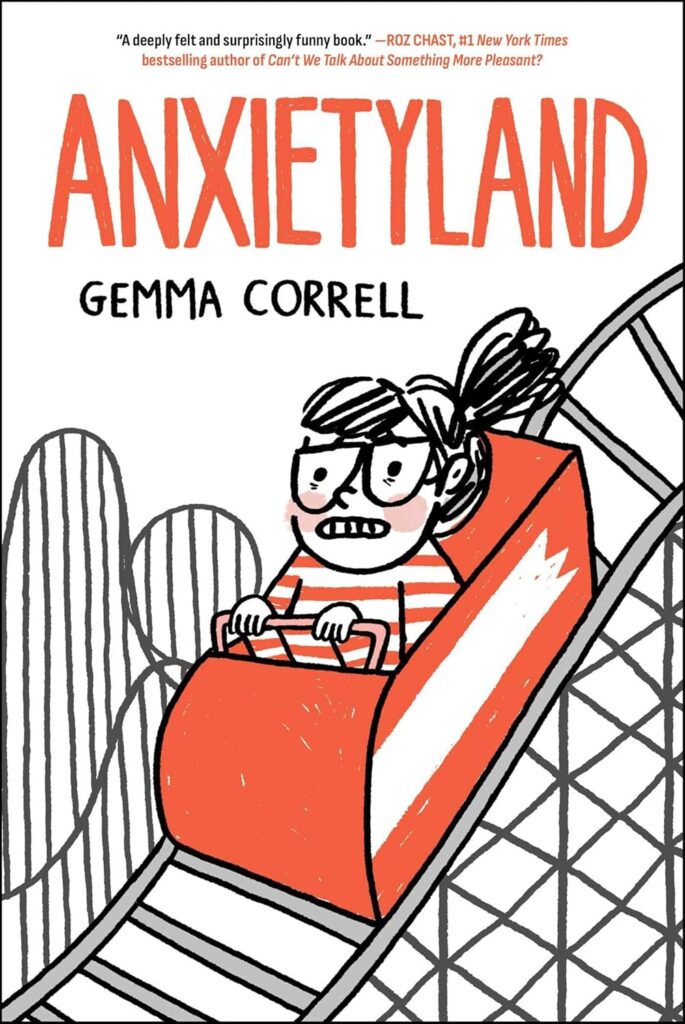
I don’t like being reminded that I have anxiety. While I’m aware that self-acceptance is grounding, when I start to think about how my anxiety manifests, I get anxious, and therefore I don’t like to think about having anxiety! A whole meaty graphic novel (over 400 pages!) about one cartoonists lifelong struggle with anxiety and depression is therefore kind of a daunting request. I am perfectly fine shaking in the corner pretending I’m perfectly fine thank you very much!
Gemma Correll’s “Anxietyland” is a humorous-yet-emotional memoir through Correll’s life with anxiety and debilitating panic attacks. Early on, the graphic novel explores how Correll – already an active cartoonist and art animator – experiences a weeks long panic attack, to the point that she checks into a partial daytime hospitalization program to seek help. Correll flashes in and out of her past experiences with anxiety and the “present” moment of the hospital to illustrate the impact of a life with anxiety, and of thinking the experience is ‘abnormal.’ I was amazed how much of Correll’s laugh-out-loud depictions of moments that felt terrible resonated with my own – abandoning social situations, hiding in bathrooms, drinking heavily to hide the anxiety… I see you!
Crucially, this is not a self-help book, nor is it the artist working through a particular trauma (as Correll reiterates, sometimes the anxiety doesn’t feel earned given her own lack of a central trauma). Instead, it’s a very real, unflinching, honest look at a pretty normal exterior life, and the internal war raging inside the author. Correll’s gifted cartooning excels at finding the absurdity in what, again, I imagine are pretty difficult moments to reveal so openly. If you have anxiety/depression, I suspect you’ll see a lot of yourself brought to life, and if you know someone struggling with the same, this may help understand.
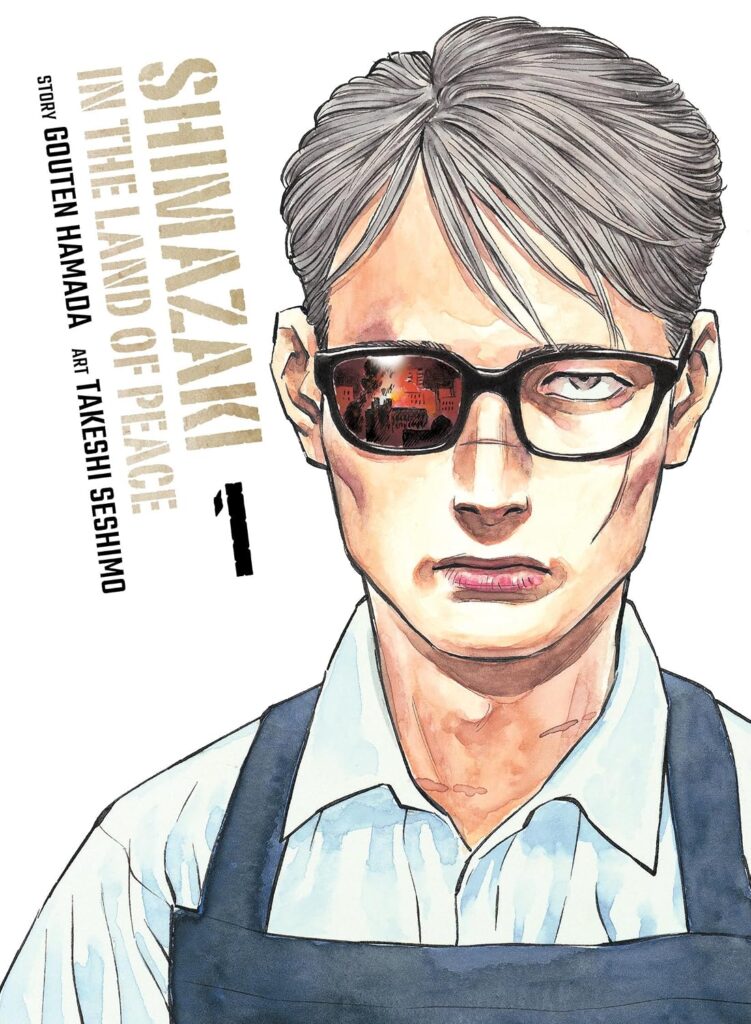
Shimazaki in the Land of Peace Vol. 1 – Vol. 8
Following the success of Way of the Househusband and Sakamoto Days, there’s a wave of manga imitators trying to capture the natural slice-of-life comedy and action that stems from “tough as nails action hero does normal life stuff.” As you’d expect with derivative creativity, it’s generally not as good. That’s what I expected of Shimizaki in the Land of Peace by Gouten Hamada and Takeshi Seshimo (Kondasha), a series set up to follow Shingo Shimazaki after 30 years captured and turned into the ultimate weapon by terrorist organization the LEL. Fortunately, Shimmy doesn’t want to be that kind of manga at all. It’s not even that Hamada and Seshimo can’t be funny – I’ve rarely smiled so broadly at a character’s attempt to make pour over coffee – it’s that they mash slice-of-life, action and the occasional wandering ronin genres into something wholly unique. It’s a pitch-perfect serious character study and look at a community of trauma survivors, bouncing in and out of tones with an almost unbelievably natural flow.
When Shimmy wants to do action, our lead transforms into El Nebulo and it’s the closest thing ongoing manga has to a John Wick. But then a chapter later, the creators comfortably slide into that same Wick saving a sandwich shop with his international knowledge of recipes. Again, there are cute funny moments, but largely it’s not played for laughs, it’s played for the development of Shimazaki fitting into a life devoid of constant violence. Naturally, that shadow lingers, as a web of espionage and LEL attempts to recapture their “asset” grow. It’s a remarkable work, intensely under the radar!
To get these picks sent directly to your mailbox every month, sign up here for free.

What kind of WOKE crap is this!?? Matt Fraction comics recommended in 2026???
Everything else looks cool though.
BOOOOOO
BOOOOOOOOOOOOO!!!!