The annual exercise of keeping up with all the best new graphic novels and comics collections is perhaps one of humanity’s greatest feats, impossible for all but the most dedicated and classically handsome, but have no fear, I’m still here! As I’ve done every year of the decade, I’ll be updating Comic Book Herald’s best graphic novels of 2026 every month throughout the year, culminating in a final unimpeachable year-end version of the best comics have to offer this year.
I cut off last year’s list at my 50 favorite comics, and will target that same number here as the year progresses. Picks are confined to completed graphic novels or full trade comics collections. This means good runs that have only been released in single issues are not yet eligible until they are collected, unless I turn into one wild and crazy guy and break my own rules. As always, the list is also limited to works that have been written or translated into English, and somehow found their way into my hands. And yes, they’re ranked in descending order ending with my very favorite favorite #1 best comic at the end!
To get all my monthly favorite picks sent directly to your mailbox every month, sign up here for free.
Last Updated: 7/29/26
Previous Best Comics of the Year Lists:
- Best Comics of 2020
- Best Comics of 2021
- Best Comics of 2022
- Best Comics of 2023
- Best Comics of 2024
- Best Comics of 2025
Without further ado… the best comics of 2026!
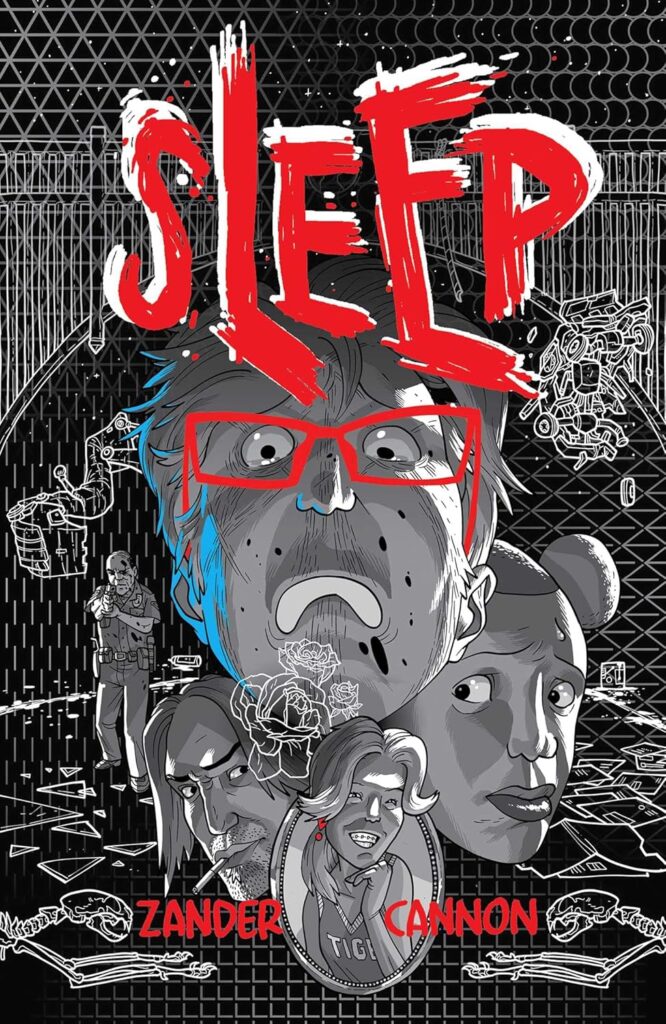
Zander Cannon’s eight issue horror series is a Lynchian werewolf inversion from the exclusive perspective of the morning after the terror. Cannon’s black-and-white (with pointedly deliberate red items) cartooning follows a protagonist in a sleepy, church-going middle American town who wakes up every morning to a new trail of amnesiac destruction. It’s a unique kind of horror comic where the protagonist is increasingly horrified and confused by his apparent murderous outbursts, but life in the small town carries on quietly… normal? It’s not that no one realizes that say, a whole house has been destroyed, but the way they accept this as the norm is bedeviling.
Perhaps this is Cannon’s way of commenting on the size of horror it takes to shake up our day-to-day routines. How many bloodsoaked tracks across our town map before we take real action towards the monster? Either way, it evokes a compelling sense of mystery apart from the obvious Werewolf in the room – what kind of monster are we dealing with here! If you’ve read Cannon’s cartooning on Top 10 or KaijuMax before, you know you’re in for confident, smooth storytelling, with a bit of experimentation baked in here as Cannon moves towards a monster’s eye view in the endgame. Sleep’s an easily gripping graphic novel, making sure you certainly won’t get any until all eight issues are complete.
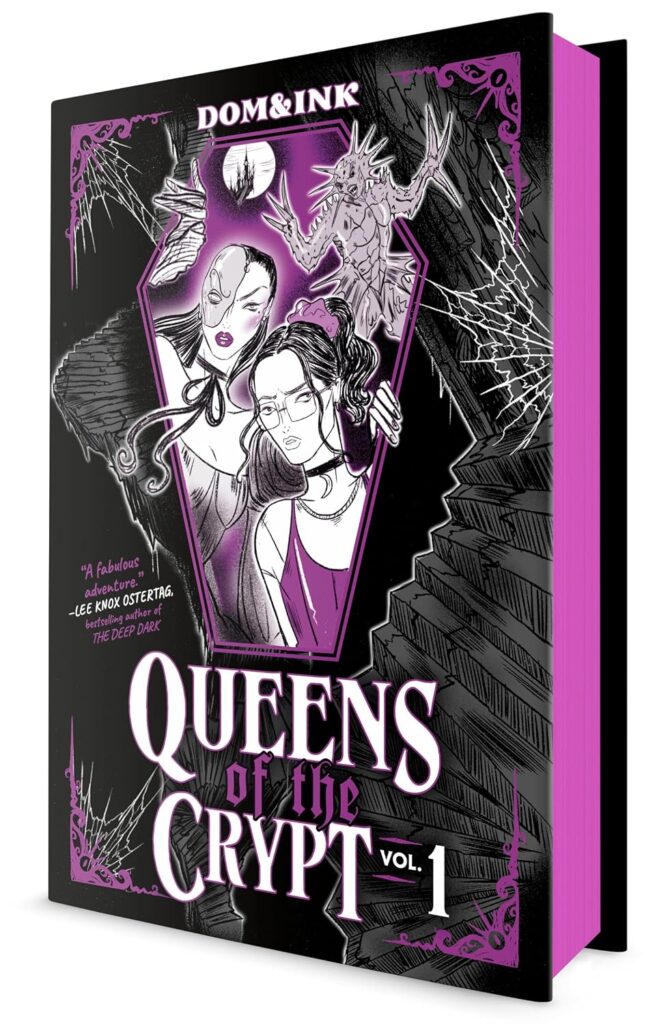
Get enough emails from people trying to get you to read a new comic, and you start to see some embarrassing hyperbole. “Watchmen meets Game of Thrones by way of Kendrick Lamar in this debut graphic novel!” “One must imagine a young Philip K. Dick writing a love letter to a time-displaced Kurt Vonnegut in this queer YA sci-fi thriller!” Leave the overreaching comparative references to hack reviewers like yours truly, please!
Of course, my teasing belies the fact that this type of sales-pitch almost always works on me, which makes it doubly exciting when the hyperbole proves true. For Queens of the Crypt by Dom&Ink, Penguin opted for E.M. Carroll (huge fan) meets Buffy the Vampire Slayer (eat a rock, Joss!) by way of the Rocky Horror Picture Show (LET’SSSS GOOOOO!). And dammit, they’re *right*. Dom&Ink’s fearlessly evocative, non-conforming cartooning evokes Carroll’s When I Arrived at the Castle, the narrative itself is full of the not-quite-scary-if-we-joke-our-way-through-it ethos of Buffy’s supernatural world, and dammit, Janet, it’s one fine young debut graphic novel!
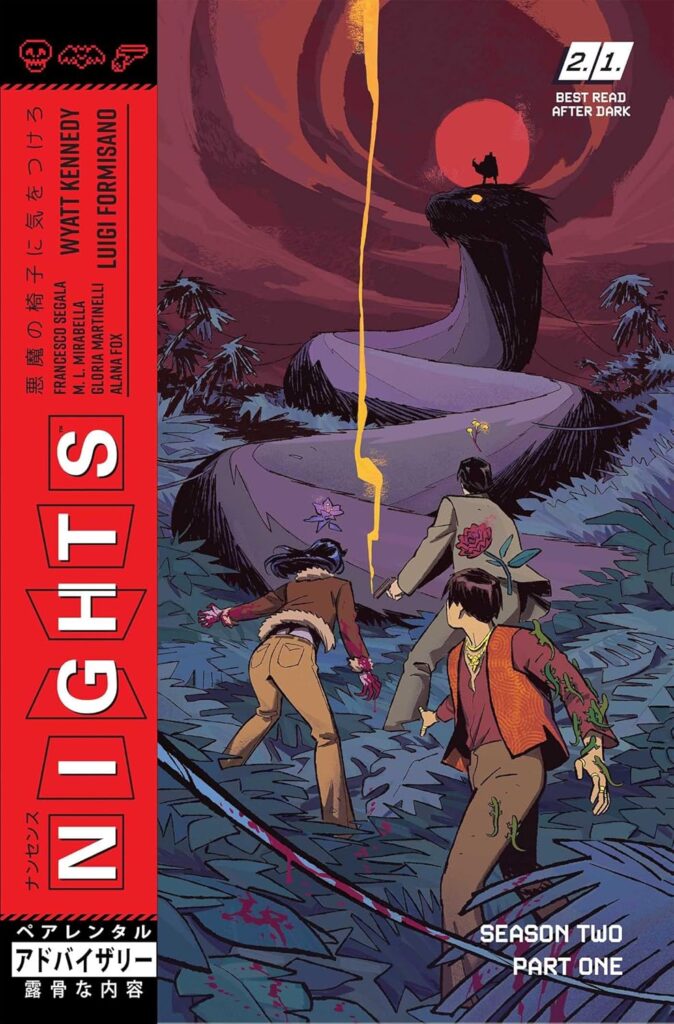
Nights Vol. 3
In basketball analysis, they talk a lot about players ‘making a leap,’ aka a clearly talented individual taking their game to the next level and elevating from star to superstar. As a Bulls fan, this usually happens once our players leave the team (Go and get it Coby and Ayo!), but it’s thrilling to see potential achieved. This is more of a rarity in independent comics, where market forces tend to put an undue amount of weight on how a series *begins*. I’m certainly guilty of this as well, although I make an effort to consider ongoing comics with some longevity as seriously as I consider shiny new opening arcs (on CBH’s best of 2025, I included 5 new volume ones and 6 stale old ongoings in the middle of their runs!).
The first volume of Nights was among my favorite comics of 2024, but I felt the second volume didn’t measure up. Reading volume three – aka Season Two, Part One – was a bit of a revelation, as creators Wyatt Kennedy and Luigi Formisano completely reset the setting, tone and focus of the book, and once again achieve comics excellence. Swinging a relatively successful Image book back to an arc completely set in the past is a huge risk, but Kennedy and Formisano prove it’s exactly what Nights needed. We’re pulled out of the modern day YA supernatural angst to the ancient days of the 1970s, with a focus on CHIMERA, the superspy network deadset on wiping out or controlling the supernatural – which of course puts them on a crash course with a younger vampire Gray.
The prequel-gambit suggests a longevity and depths to Nights that I wasn’t sure we’d see, and I’m so excited about that! Nights has made the leap, and it’s one of the best ongoing runs of 2026!
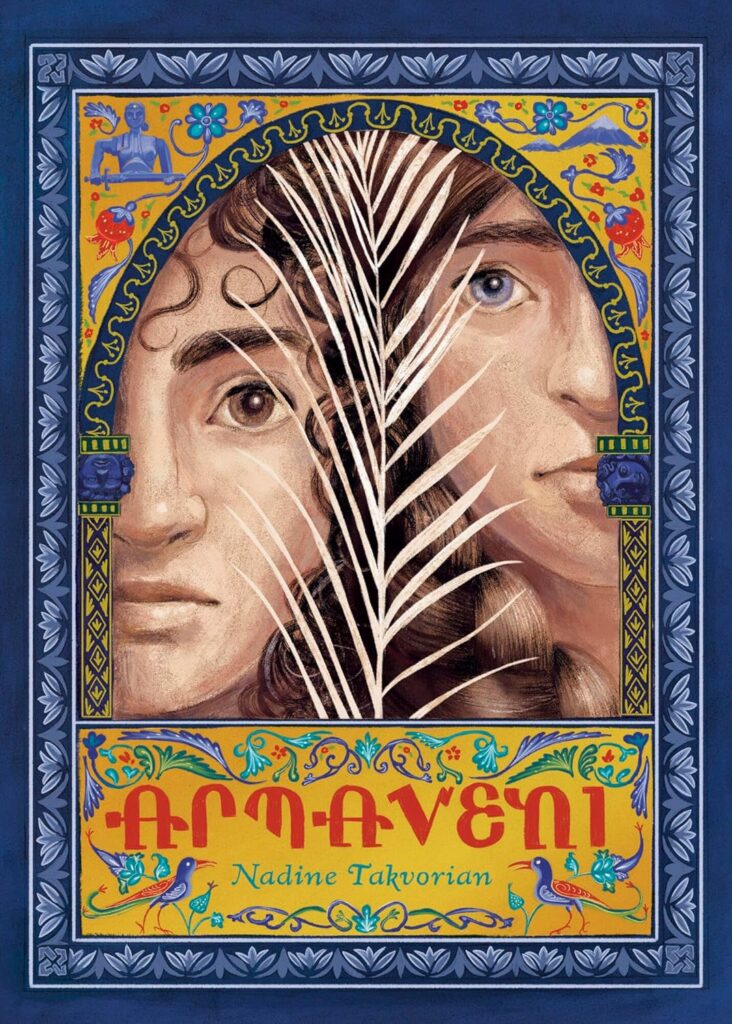
Armaveni
There are too many graphic novels about genocide. This is of course less the fault of the artists than the history, where one would be too many. But as awareness increases globally, and squashed histories become harder than ever to keep from rising like the phoenix, I’m finding a comics landscape suddenly full of familial legacies that make me question what I ever saw in humanity.
Armaveni is Nadine Takvorian’s personal history of the Armenian Genocide of the mid 1910s via Levine Querido books. Takvorian is a gifted cartoonist, with a natural ability to weave memoir, flashback and family histories into one informative, emotionally gripping work. At one notable point, Armaveni contains one of the most searingly memorable depictions of genocide in action that I’ve read. Educational with a heart, Armaveni is well worth a read.
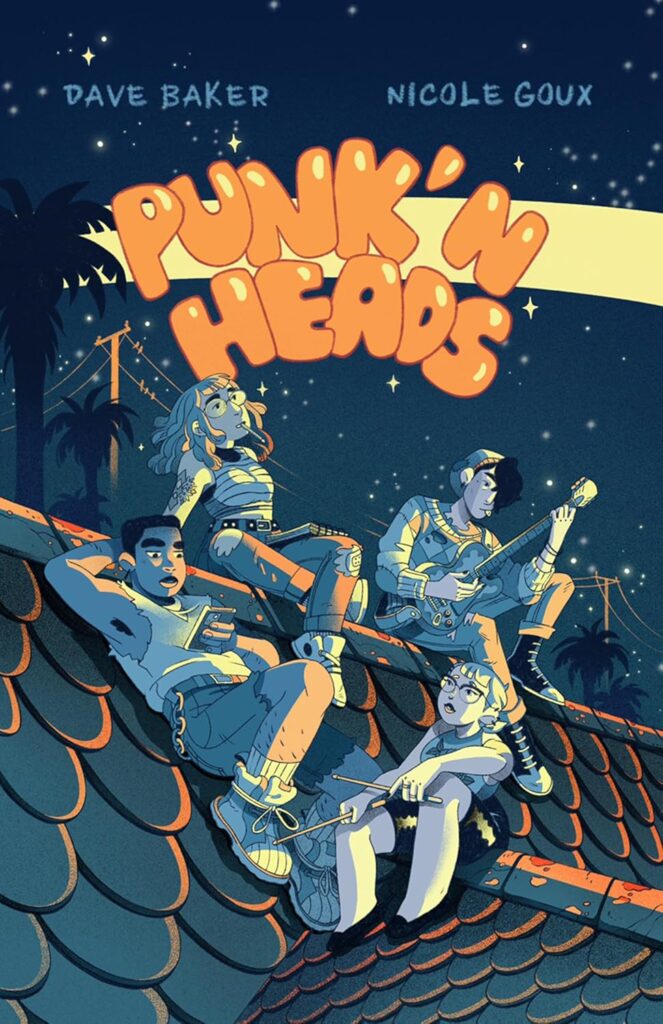
Punk’N Heads
“Teenage angst has paid off well; Now I’m bored and old.” Dave Baker and Nicole Goux have made a habit of capturing the messy transition into adulthood (F*** Off Squad, Forest Hills Bootleg Society), and for my money, Punk’N Heads is their most effective collaboration yet. I thought this would be because I’m a sucker for bad/emerging rockers. Spinal Tap, Tenacious D, Flight of the Conchords, and of course, last year’s Beat It, Rufus from Noah Van Sciver. While Punk N’ Heads is very much about a subslice of the punk rock scene in LA, I did have to recalibrate my expectations for Baker and Goux’s aims. In short, it’s not a rock comedy, it’s a character drama, where yes, sometimes there’s great comedy when a queer punk rock band wearing pumpkin heads gets booked for a children’s birthday party.
Once I made this shift in my reading, the inner riches of Punk’N Heads hit my system with the right force. Baker and Goux are modern masters at illustrating the mess, confusion, and potential of finding direction and community in your 20s. As the work progresses, that focus hones in on some soul-stirringly profound reflections on creativity and the lifelong artistic goal of truly capturing *your* voice. Goux is perfectly suited to render these emotive considerations visually – as you know, if you’ve read This Place Kills Me with Mariko Tamaki – putting a truly remarkable amount of detail into everything from a painter’s trailer to the more obviously spectacle-laced full-page rock-out spreads.
It’s a longer work with relatively concentrated heavy character beats, so Baker and Goux wisely separate chapters both with Silver Age romance comics scene-setting, and manga-outtake esque mini asides between chapters. It might seem like a small thing too, but Goux’s book design features one of my favorite additions of the year – pumpkin head fold outs on the front and back covers! These can be used as bookmarks, they look fun, AND that’s what the band wears. YES. Book design!
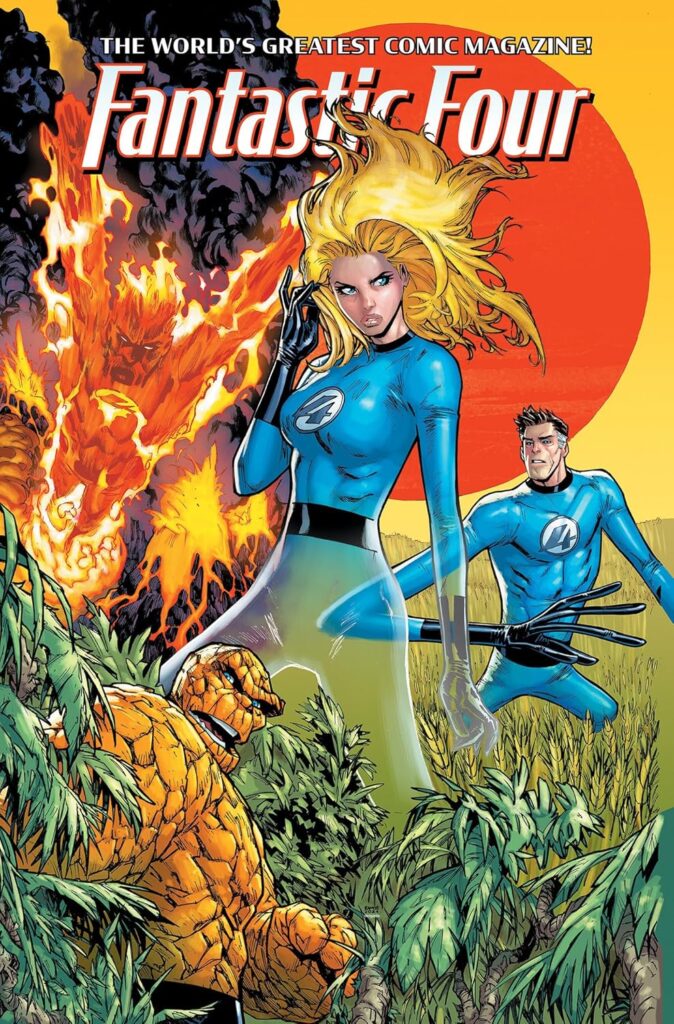
Fantastic Four Vol. 1
For me, the health of superhero comics is understood through how many runs have a legitimate chance to go down as all time greats, or contenders for the franchise’s best. When I think of the times I most enjoyed Big 2 comics, it’s usually because the year or era has multiple contenders at a time. Whether or not something actually surpasses the impossibly high bars of Kirby/Lee Fantastic Four or Claremont and friends on X-Men isn’t really important. The point is that something’s making me think it has a chance. That’s the thrill.
I was nervous to jump back into the Ryan North written Fantastic Four, which doesn’t make much sense (FF plus One World Under Doom were among my 2025 favorites) but Marvel made the predictable-yet-obnoxious decision to relaunch the 30+ issue run with a new #1 issue (while simultaneously tying into One World Under Doom), and just… like, bad vibes, ya know? That North and new FF collab Humberto Ramos are able to muscle their way past those barriers to entry is just another reason to believe this run is something of a miracle.
I’m pleased to report that North’s time on the first family remains a legitimate contender, and among my favorite Fantastic Four runs of all time. North continues the approach of placing the family in short-burst impossible sci-fi scenarios, and then scientifically familying (a word! shut up spellcheck!) their way out. Here, the challenge is first escaping from Doctor Doom scattering the 4 through different points in time, and *then* outthinking Doom’s Sorcerer Supreme infused ability to “savepoint” and rewind every battle/interaction like it’s a video game.
I’m not willing to solidify and rankings, but I will say I’d rather read this run a second time than read Hickman’s Fantastic Four a fourth time. Does that mean *anything*? Who’s to say! It’s a run in contention with the greats, though, and we (see also: Marvel) need more of those!
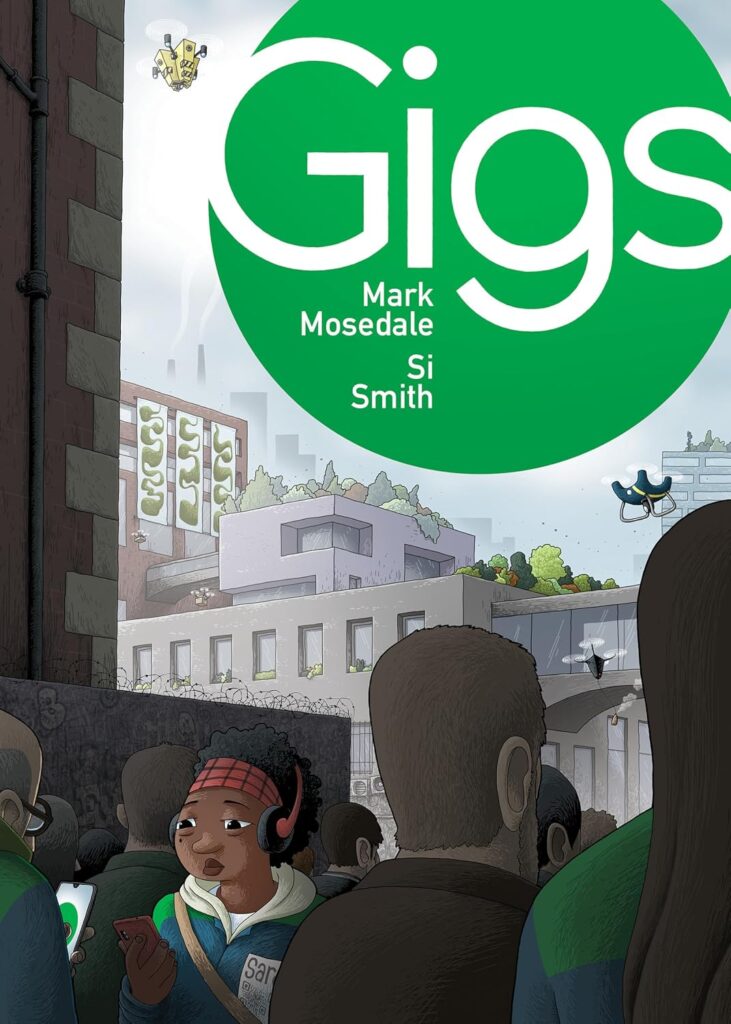
What if Mark Zuckerberg bought the Minority Report tech and used it to acquire ZipRecruiter? Wait no, what if comics creators imagined a near-future quasi-dystopia that forecasted the emergent trends of late-stage capitalism and AI in the workplace? Wait, no, no, no….
What if a new sci-fi graphic novel was smart, heartfelt, and really, really good? That’s the one!
Gigs is a new graphic novel from Mark Mosedale and Si Smith, via Top Shelf, where a series of interconnected short stories paint an altogether believable future look at the way technology and corporate mergers are consolidating the way we work, and the very nature of humans as cogs in algorithmic job-machine. Fortunately, the comics are a lot less like the semi-interesting LinkedIn post I seem to be describing (jeez, this guy’s even criticizing himself!), and find a deeply felt human heart at the center of this just-out-of-reach future.
For the majority of the graphic novel, Mosedale and Smith offer a bleak yet resisted future, whether it’s a gig-working woman developing an unlikely relationship with an old tech-punk, or an anti-gig graffiti artist sisyphean fight against the tech oligarchy. The ending is the most controversial decision for me, as it falls into the sci-fi trap of feeling like it needs to answer the dilemma lest we all fall into a pit of despair. Regardless, Gigs is an of-the-moment win, even if it means we’re all losing.
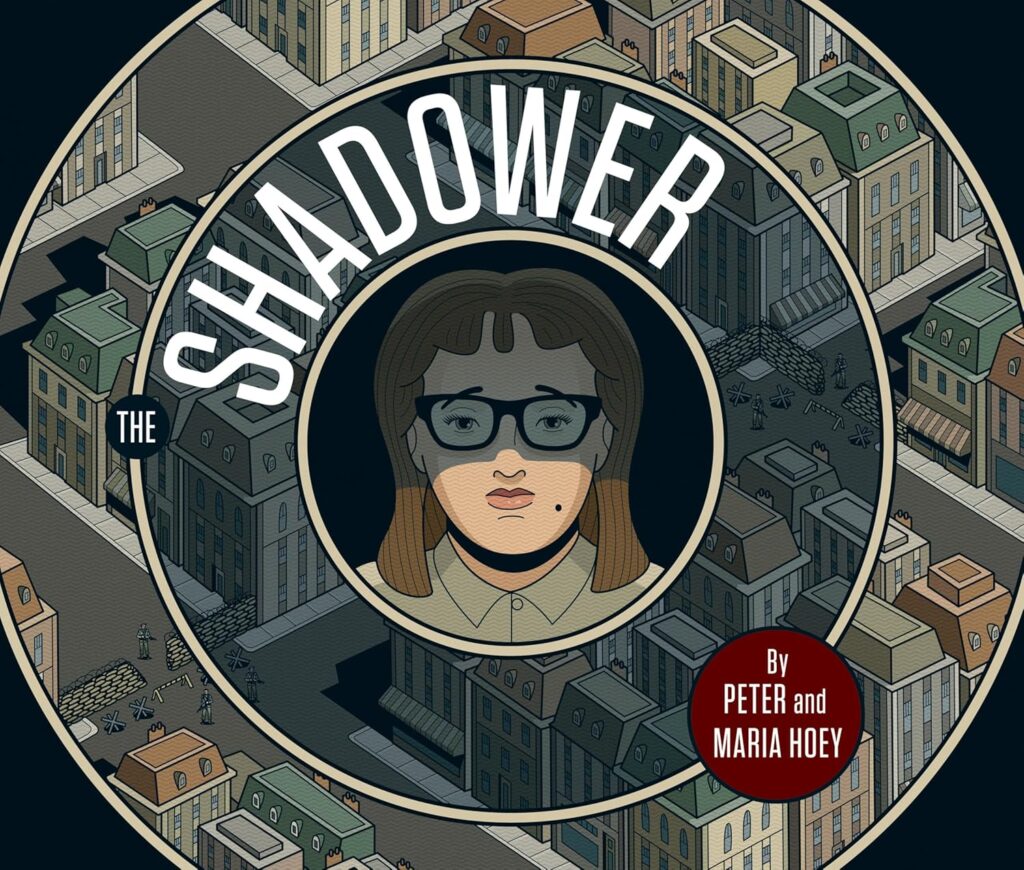
The Shadower
You’re excited to read The Shadower by Peter and Maria Hoey. Their graphic novel In Perpetuity was one of your favorite graphic novels of 2024. You pick up your tablet to read The Shadower. It’s a water-marked review copy not fit for horizontal reading on a tablet. One strike. You forge ahead because the wait time at your local library is too long. You begin to read The Shadower.
You observe the Hoey’s working in their patented style, an emotionless, descriptive form of mathematical world-building that effectively evokes sinister dread lurking underneath. The Shadower focuses on a young actress pulled into a world of espionage as her role takes over more and more of her reality. You think of comparing the work to John Le Carré by way of Chris Ware constructing a biography of Nathan Fielder, but realize this may be a function of a limited referential palate. You consider reading a wider range of spy fiction but acknowledge this is unlikely.
You occasionally find yourself growing tired of the narrative – yes, yes, this role is consuming her – but are a devoted reader, and the Hoeys always pull you out of the doldrums just in time. Good thing. You read the ending. It’s the best ending of a graphic novel you’ve read this year. You sit down to review The Shadower by Peter and Maria Hoey.
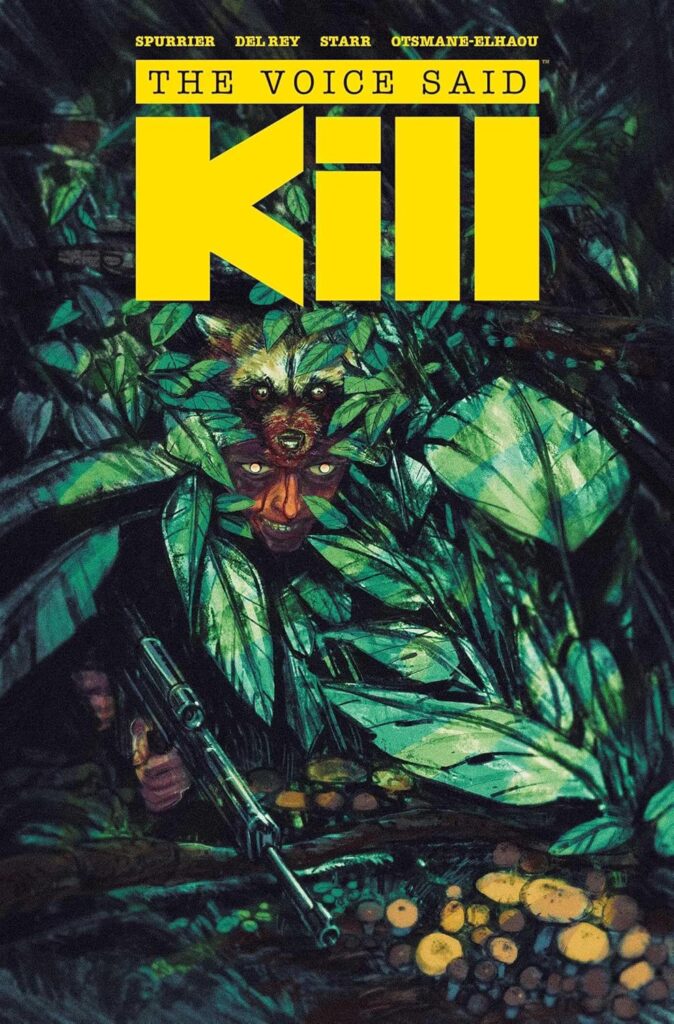
The Voice Said Kill
One of the first comics review gigs I landed (for a now long-defunct site!) led me to an editor who pushed me to personalize my reviews. “Anyone can describe a comic, but only you can describe what *you* felt,” I imagine he said. “You’re so smart and cool. You’re destined for great – possibly the greatest – things,” I imagine he continued. The advice stuck with me, as did the comic where I first applied those lessons: The Empty Man #1 by Cullen Bunn and Vanesa Del Rey. Apart from a legacy as one of the wildest comics-to-movie trivia blurbs in history (The film version was one of the first to hit pandemic theaters in October 2020… you’re not gonna believe this, but it performed horribly!), The Empty Man introduced me to the gorgeously idiosyncratic visual stylings of Del Rey. I identified an artist due for superstardom, and while that hasn’t quite played out (if only the world at large could catch up!), Del Rey’s continued achieving critical adoration via 2018’s Eisner-winning Redlands, a cult-favorite Scarlet Witch run with James Robinson, and now one of my early favorite comics of 2026, The Voice Said Kill with Si Spurrier via Image Comics.
Spurrier’s post X-Men comics career has elevated the writer to another tier. For my money, this is effectively through Spurrier’s ability to work against type. If I’d had to describe Spurrier previously, I’d point to his work writing John Constantine or Dr. Nemesis, verbose-literary characters who never pass by an opportunity to bludgeon you over the head as the smartest guy in the room. Yet, in Step by Bloody Step with Matías Bergara, Spurrier ceded a silent work to Bergara’s visualizations, and in the most notable example of growth yet, In The Voice Said Kill, Spurrier channels Elmore Leonard with a perfectly cast Del Rey to bring the sweltering Flordia swamps to life.
Spurrier nailing a work that sidesteps Justified, Ozark and southern-broiled crime fiction felt about as likely as Taylor Swift’s Screamo-era, but here we are! The work centers around a pregnant not-technically-a-cop wildlife protection officer, as she’s embroiled deeper and deeper in webs of competing criminal plots. Told less abstractly, the work might feel too familiar – with a centerpiece you may well see coming – but fortunately Del Rey won’t allow that. You feel the dark of the marsh, the menacing shadow of the crocs, and the impossible challenge of escape with your life. Tight, beautiful, and just strange enough to keep you guessing, The Voice Said Kill is one of the year’s best.
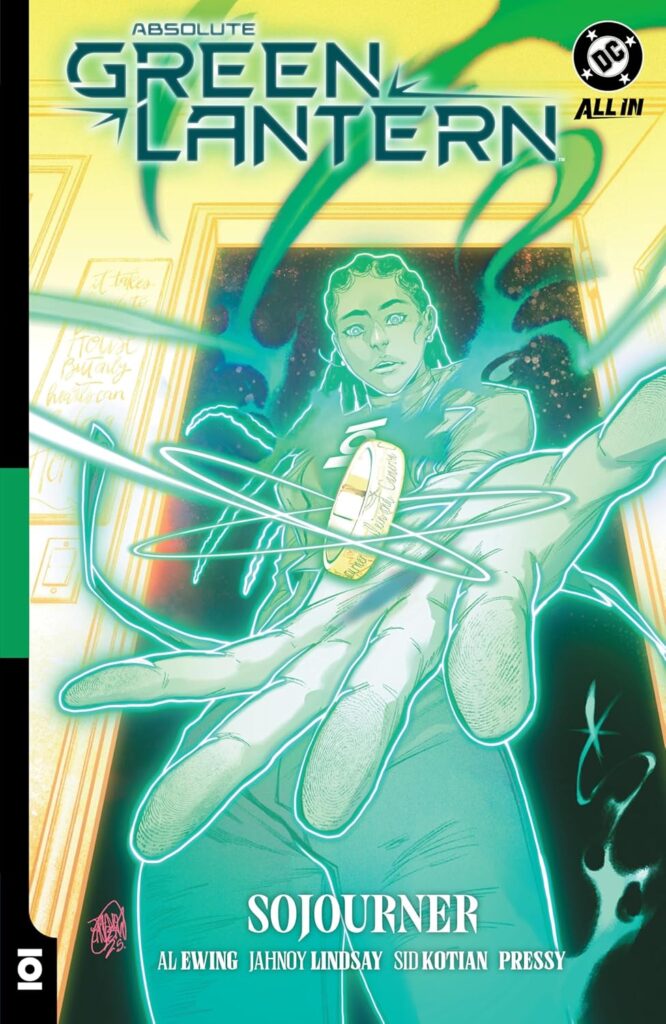
Welcome back, Al Ewing! From 2018 to 2023 there was an argument to be made that Al Ewing was the best superhero comics writer (Immortal Hulk, X-Men Red, SWORD, Guardians of the Galaxy, Defenders), but the ensuing years haven’t quite measured up (thought certainly with Immortal Thor it’s not for lack of trying). Ewing’s an interesting Absolute Universe presence, as he’s practically brand new to DC (not forgetting a quite well liked Metamorpho mini), and because his presence on Absolute Green Lantern with relative newcomer artist Jahnoy Lindsay created a rare imbalance of writer outweighing artist. This is not the Absolute way!
Where volume one was intriguing without the knockout highs of Absolute Batman or Wonder Woman, and quite literally grounded to the Evergreen, Colorado Green Lantern crash site, volume two ascends to the stars, in every sense. Ewing was *born* to reimagine the cosmic emotional light spectrum of the lanterns, and every new reveal and lantern mythology appearance is beyond thrilling. Crucially, this is just the frosting, as the internal study of Jo Mullein, Green Lantern, remains the focus. Ewing digs deep into Mullein’s past, developing queerness, and relationship struggles with Renee Montoya (squee!) and Cam Chase (squeeeee!). It’s as deeply felt as our understanding of any Absolute Universe hero to date.
The biggest question with Absolute Green Lantern is whether Lindsay is up for reaching the bars set by Dragotta, Sherman, Sandoval, Robles, et al. Visually, the work never ascends to the top tier of Dragotta/Sherman, and while strong storytelling, the bar for the Absolute Universe is “Coolest s*** you’ve ever seen in your life.” I don’t make the rules! That’s just the bar! Absolute Green Lantern hasn’t gotten there. Long term, this also might not really be the right question – as Lindsay is entirely absent from what will be volume three. But there’s still a leap this book can make if Ewing finds the right collaborator.
Either way, it’s pretty easily one of my 10 favorite ongoing superhero comics, and my third favorite Absolute comic.
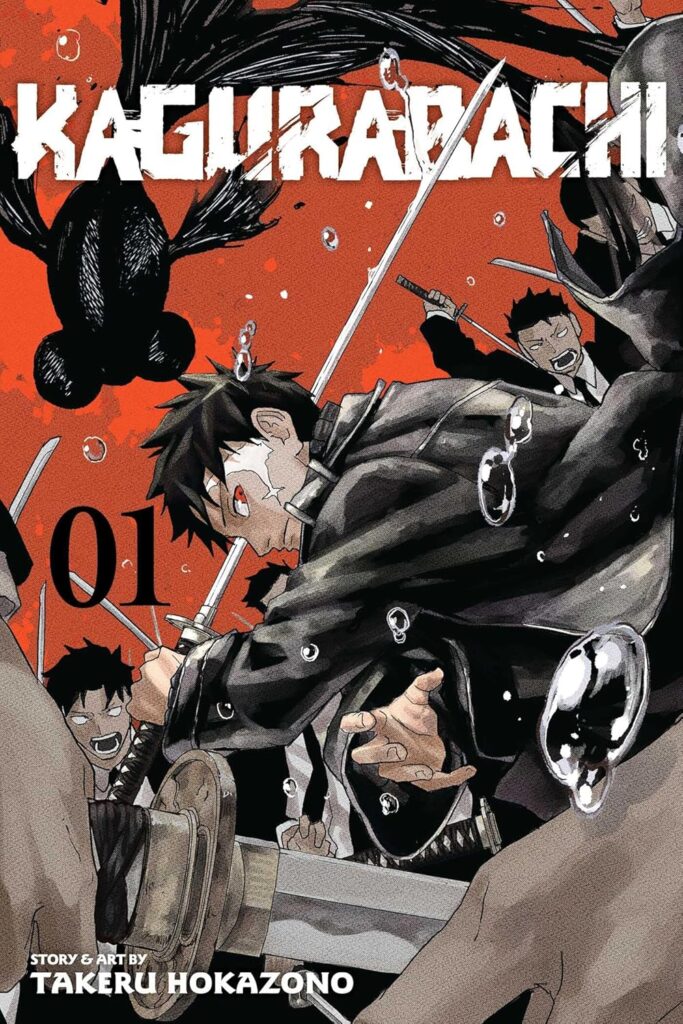
In my quest for the best new-ish manga of the 2020s, there are two titles that come up more than any other: Kagurabachi and Gachiakuta. I’m mostly caught up through English releases on both, and for my money, Kagurabachi by Takeru Hokazono is the clear winner. The Shonen samurai hit checks off all the “Gonna be a hit anime in 2027” boxes with Dragon Ball questing, video game logic hunting for enchanted swords, and striking action visuals (shy of Fujimoto’s bar, but that’s why it’s the bar to clear). Hokazono isn’t reinventing any wheels here (RIYL Blue Samurai), but the earnest dedication to a magic system layered on top of the classic ronin revenge narrative is consistently a blast.
Through seven English volumes, I’m most impressed how easily Hokazono launches into extremely compelling new arcs, shifting from enchanted sword questing to supernatural sorcerer auctions to a reveal of the actual enchanted sword-bearers. I’d put Kagurabachi on par with the easy bingeability of Kaiju No. 8, Dandadan, or Choujin X, and recent moments – CROW – suggest Hokazono is only getting better.
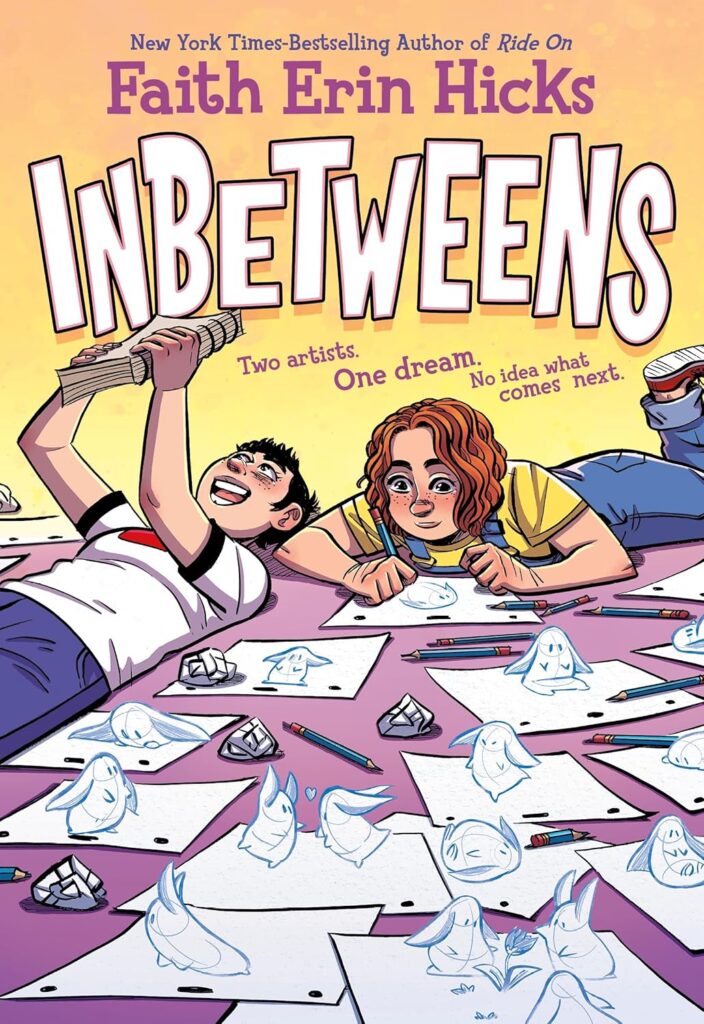
Faith Erin Hicks is a superstar YA cartoonist, so I fully expected to think highly of Inbetweens. What I did *not* expect was a world so fully realized that I started looking at the fictional twin sisters with the same parental care that I typically reserve for my actual children overcoming the challenges of their own worlds. Hicks captures a depth of feeling and emerging youthful creativity to such a successful degree that I actually saw and felt for my own children. After completion I immediately placed the graphic novel on my 9 year old’s pillow (the secret: you don’t ever suggest a kid read something you like; you just lay it somewhere where they’ll fall into it themselves!).
Inbetweens is about twin sisters Sloane and Ash, both gifted artists who enter a summer school animation program with dreams of professional careers as animators for Disney (Yes, this means the work is set in the late 90s, and no we will not be wallowing in the present day reality that such jobs for humans are endangered!). Hicks nails the energy of young artists, the pressure of trying to live up to ideals and your heroes (even if it turns out your heroes are JERKS), and the power of supportive family and friends. It’s sweet, funny, and allows for some gorgeous rendering of raw animation on the comics page. This might just be my favorite graphic novel from Hicks yet.
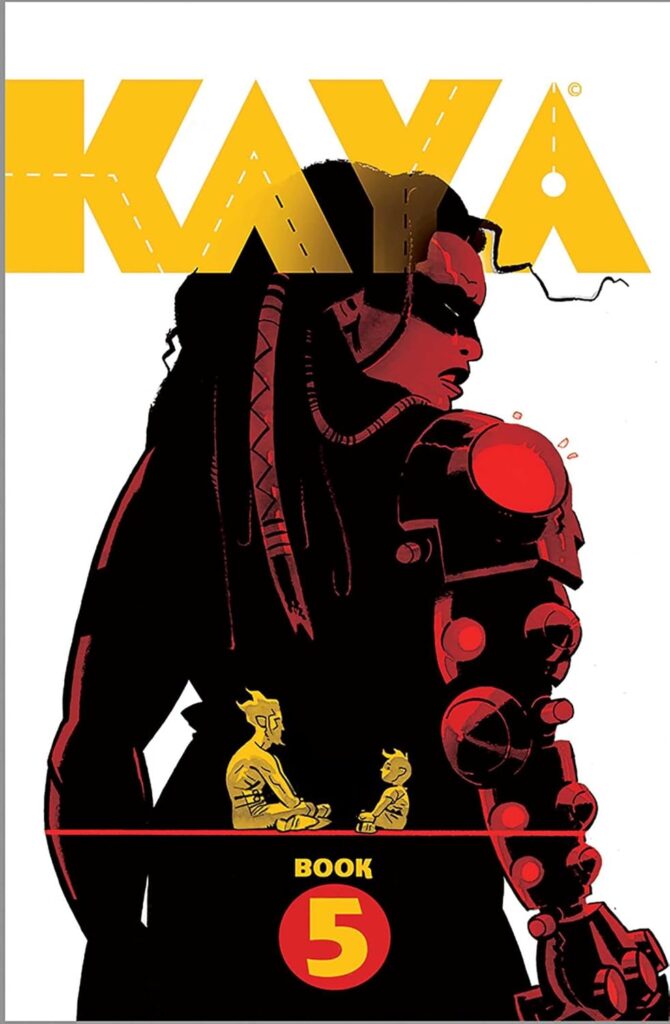
Kaya Vol. 5
We were conversating in the My Marvelous Year Slack recently about the realities of attempting an ongoing indie comic in today’s market (prompted by Spike Stonehand’s very good Divining Comics newsletter). The focus was on Kieron Gillen’s reveal that The Power Fantasy might end with issue #16 and that the series (which in my head, I imagined running for years and years!) was financially doing “fine” but hardly great. I quite like The Power Fantasy (it was on CBH’s 2025 favorite books), and the idea that a well-known writer coming off X-MEN would have a hard time sustaining a superhero riff… it does not at all bode well for the traditional ongoing indie comics market!
Which is all a long-winded way of celebrating what Wes Craig is achieving on Kaya, now collected through 30 issues, and one of the longest-running Image Comics to begin in the 2020s (Kaya #1 came out in late 2022). Jeff Smith’s Bone is obviously the gold standard in all ages fantasy adventure comics, and Craig’s Kaya strives for those heights in a world of anthropomorphic creatures, transformative magic, impish mythical beings, and robot kingdoms. It’s consistently impressive considering how thoroughly Craig transitioned from “Rick Remender’s incredible Deadly Class artist” to his very own creator-owned do-it-all comics machine. Shades of Shohei warming up to pitch in the World Series (what can’t this guy do?!).
Anyway, I love Kaya. You should too. I hope it breaks all the rules and hits 50 issues!
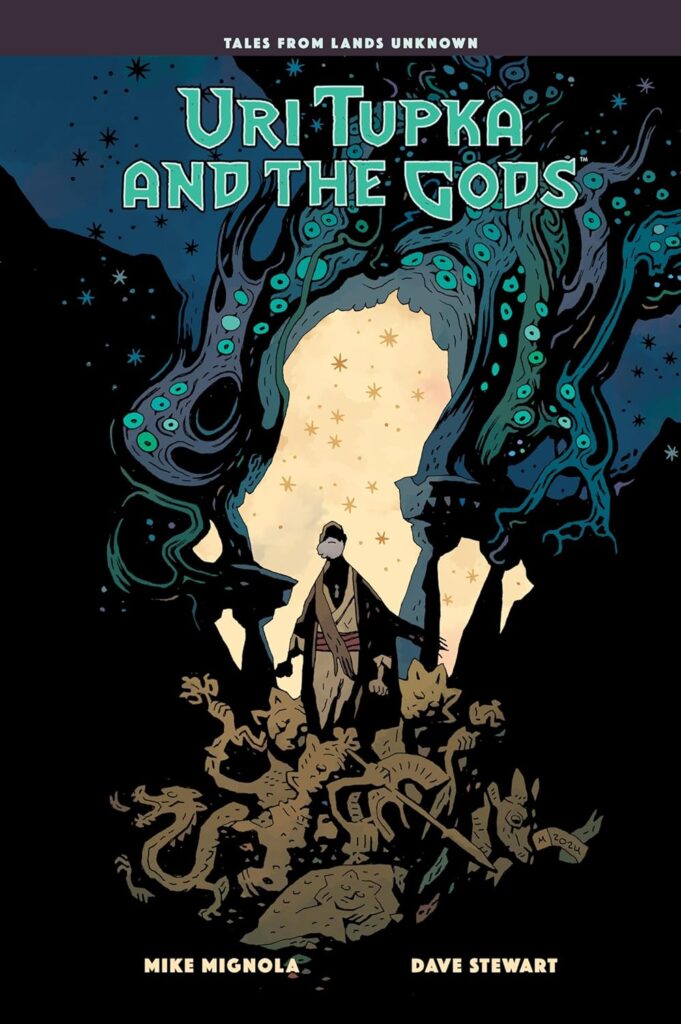
Uri Tupka and the Gods: Another Story from Lands Unknown
Mike Mignola loves comics storytelling so much that he’s rebuilding a whole new mythology from scratch – post Hellboy (one of the great comics landscapes of the modern era)! It’s among the most positive late-stage career arcs in the history of comics, an industry which obviously has more than its fair share of heartbroken creators. Mignola’s Lands Unknown are certainly in line with the author’s established fixations – dark magic, secret mythologies, quirky talking animals making lil’ jokes while you read some of the darkest folk you’ve seen in your life – and I for one just can’t get over how *fun* it is to see the legend so obviously enthralled.
I prefer Uri Tupka and the Gods to the previous entry (the quite good Bowling with Corpses), largely because it centers the anthology of short folk-horror stories around the titular Tupka (say that twenty times fast!). It’s a more focused guide through the Lands Unknown, where the depth of history and cosmology can overwhelm at this (seemingly) early stage. Tupka will return later this year with Uri Tupka and the Devils, and I absolutely can’t wait. A new Mignola graphic novel every year? Say less!
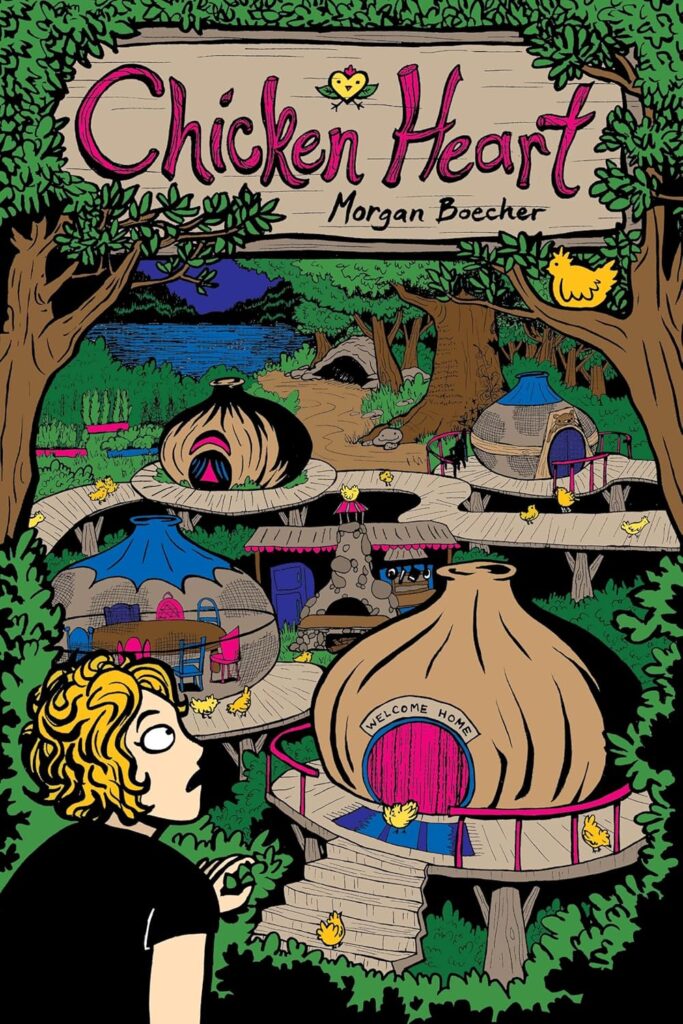
Chicken Heart
One of the great thrills of seeking all the best new comics is the feeling of opening a new book not knowing if it’s going to hit or miss. I’ll be 122 pages into a trade I really like and still have this nagging feeling in the back of my head that I should start one of those new downloads just in case its *even better*. Generally, I’m chasing a high that doesn’t return (D.A.R.E. kids!) but with Chicken Heart it worked! Bad habits sometimes pay off and should never be changed!
Out now from Street Noise Books, Morgan Boecher’s first full length graphic novel is a marvel. Chicken Heart follows the story of a stand-up comic presenting as female learning of the death of her Trans aunt, visiting her aunt’s Chicken Heart community for “misfits” like herself, and ultimately learning to come to terms with their own trans reality. It’s funny (the lead is a stand-up after all), heartbreaking, and emotionally gripping. Boecher’s character-centric panels, Allred-thick inks, locale specific monocolors (pink for the city, green for Chicken Heart) all play together perfectly for a plaintive yet satisfying journey of self-discovery.
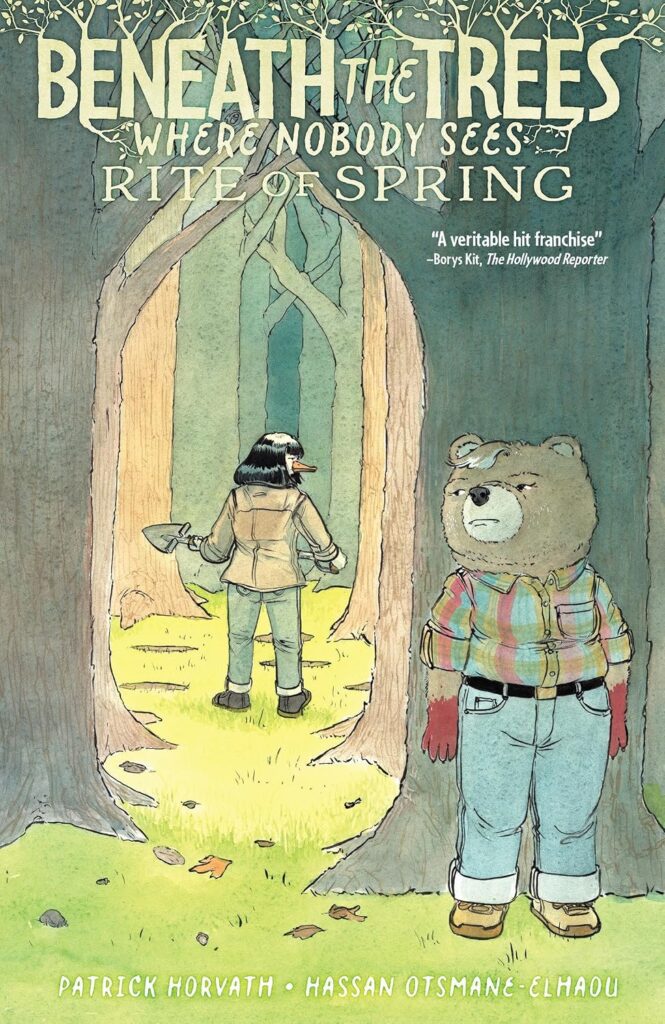
Beneath The Trees Where Nobody Sees: Rites of Spring
The single biggest surprise in putting together my guide to the most popular comics of the 2020s came from seeing just how big Beneath The Trees Where Nobody Sees actually got. I knew I loved Patrick Horvath’s vision of Dexter by way of the Berenstain Bears but it’s extremely cool that this IDW miniseries exploded in collection edition sales and via a Webtoon expansion. In the aftermath of “Holy cow, it’s a hit!,” the most pressing question facing Horvath (and Eisner-award winning letterer Hassan Otsmane-Elhaou) is whether Beneath The Trees Where Nobody Sees demands *more story* or if sequels are simply the byproduct of such overwhelming success that everyone involved had no choice!
“Rites of Spring” easily answers in the affirmative, with a sequel that jumps serial-killing Samantha Strong from 1980s Woodbrook to 1990s Woodbrook and the advent of the internet. It’s a compulsively readable cold-case where we know all the answers, told in dark noir captions and Horvath’s gorgeously inventive of storybook grotesqueries. It would have been easy to simply sit in Woodbrook and reap the rewards of a hit, but Horvath seems unwilling to take the easiest road, allowing a significant passage of time and escalating surprises that ensure “Beneath The Trees” never lies stuck buried in a paint can of its own making. Given the announcement that the story will conclude with a 2027 release, we can rest assured we’re getting the best version of a well-deserved indie hit.
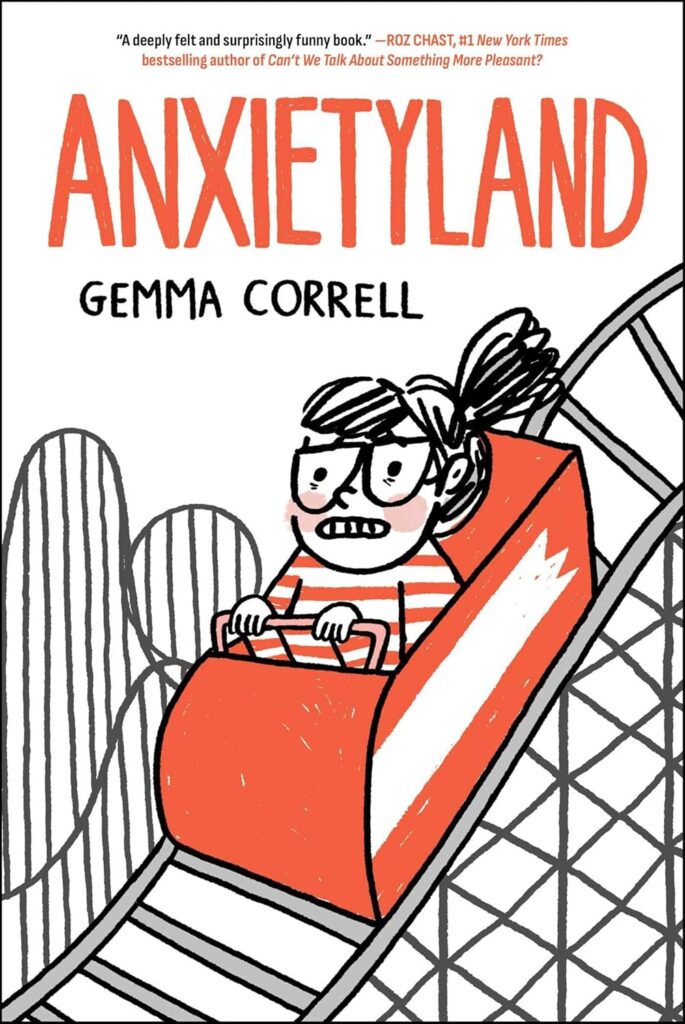
I don’t like being reminded that I have anxiety. While I’m aware that self-acceptance is grounding, when I start to think about how my anxiety manifests, I get anxious, and therefore I don’t like to think about having anxiety! A whole meaty graphic novel (over 400 pages!) about one cartoonists lifelong struggle with anxiety and depression is therefore kind of a daunting request. I am perfectly fine shaking in the corner pretending I’m perfectly fine thank you very much!
Gemma Correll’s “Anxietyland” is a humorous-yet-emotional memoir through Correll’s life with anxiety and debilitating panic attacks. Early on, the graphic novel explores how Correll – already an active cartoonist and art animator – experiences a weeks long panic attack, to the point that she checks into a partial daytime hospitalization program to seek help. Correll flashes in and out of her past experiences with anxiety and the “present” moment of the hospital to illustrate the impact of a life with anxiety, and of thinking the experience is ‘abnormal.’ I was amazed how much of Correll’s laugh-out-loud depictions of moments that felt terrible resonated with my own – abandoning social situations, hiding in bathrooms, drinking heavily to hide the anxiety… I see you!
Crucially, this is not a self-help book, nor is it the artist working through a particular trauma (as Correll reiterates, sometimes the anxiety doesn’t feel earned given her own lack of a central trauma). Instead, it’s a very real, unflinching, honest look at a pretty normal exterior life, and the internal war raging inside the author. Correll’s gifted cartooning excels at finding the absurdity in what, again, I imagine are pretty difficult moments to reveal so openly. If you have anxiety/depression, I suspect you’ll see a lot of yourself brought to life, and if you know someone struggling with the same, this may help understand.
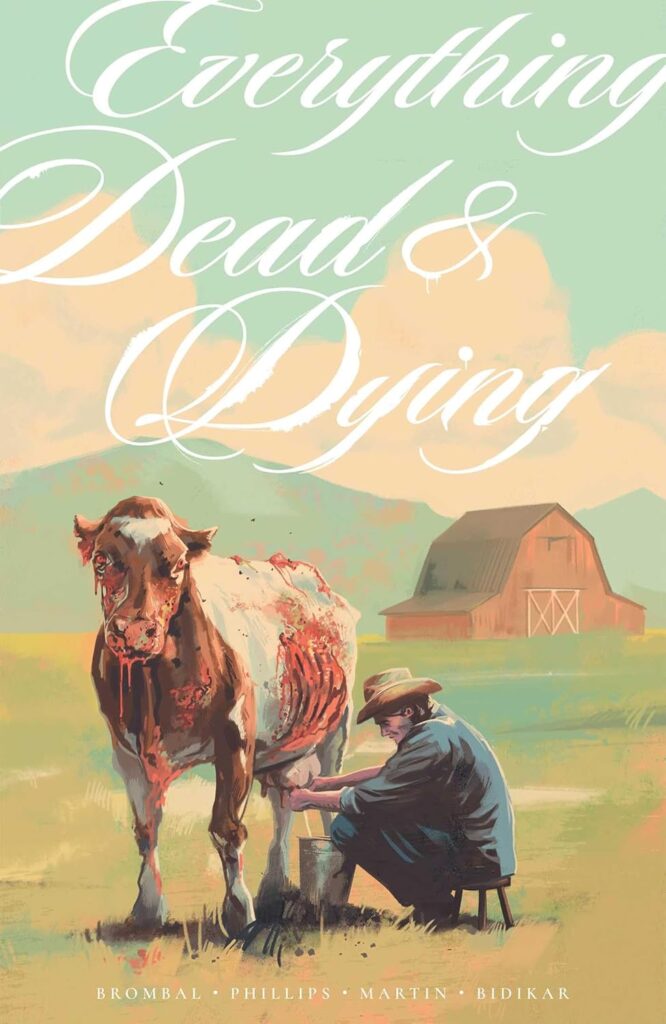
Tate Brombal, Jacob Phillips, Pip Martin and Aditya Bidikar craft a melancholic, post Walking Dead zombie masterclass, recently nominated for a 2026 Eisner for best limited series. Phillips has rapidly entered John Romita Jr territory as the son of a comics legend (Sean Phillips) ascending into his own superstardom. Phillips’ resume (That Texas Blood, Newburn, coloring his father across Reckless and Criminal) is critically adored and near-flawless, and for my money, Everything Dead and Dying is his best work yet, oscillating between the aching romance of the past and violent pain of the present.
Brombal largely avoids zombie fiction tropes by focusing on Jack Chandler, a farmer and gay man, tending to a whole community taken by a zombie virus (that he’s mysteriously immune to). The narrative inversion is that our hero wants to keep the zombies “alive” as they include his husband and their daughter. While this might seem, uh, mentally unwell, the creative team completely sells the emotional conviction of Chandler protecting and surviving despite the encroaching decay. Brombal has proven exceptionally gifted at depicting the experience of being gay in hostile communities (Black Hammer: Barbalien), and that’s the secret here, where Chandler becomes the caretaker for a community that showed him no shortage of bigotry. It’s a gripping, emotionally powerful zombie graphic novel, and great work from everyone involved.
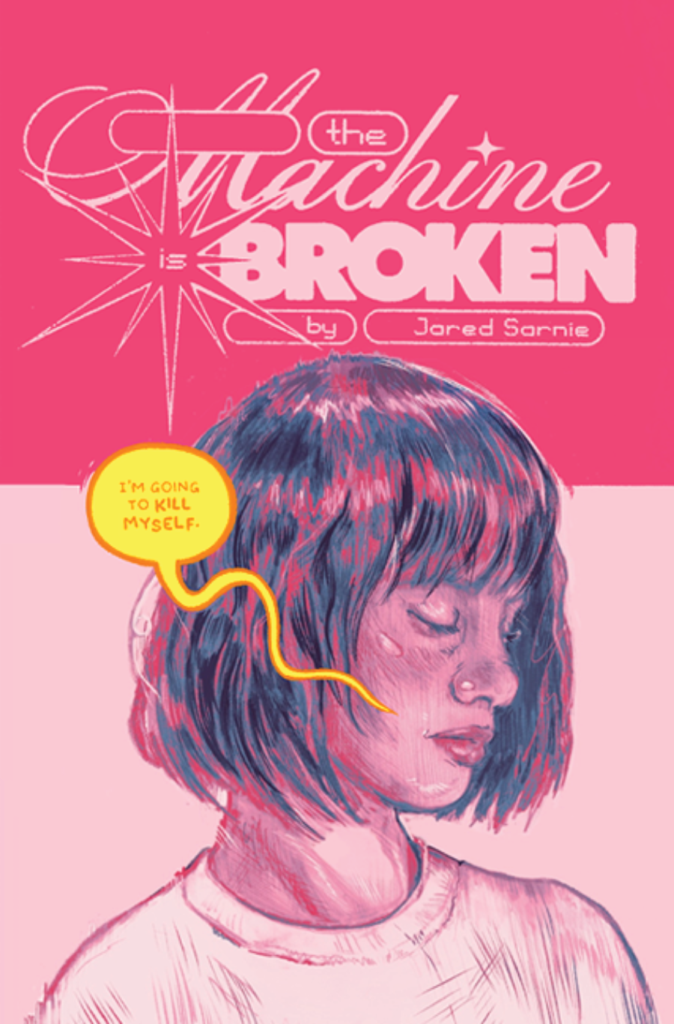
Jared Sarnie’s debut graphic novel (via Fieldmouse Press) is an ice cold bucket of water dropped over your head from the 2nd floor while an aeroplane trails the message “YOU CAN JUST BREAK THE RULES” in the sky above you. Narratively the center here is a young woman, her sister and her mom traveling to Zurich so she can use a “euthanasia pod” aka the “exit shell” via assisted suicide. This sounds much heavier than it is. While there is some emotional resonance and care there, Sarnie’s primarily playing at satirical humor – spoilers: the shell breaks a valve and it doesn’t work!
The real force of The Machine is Broken is style. Sarnie airdrops in and out of cartooning styles like his pen might stop working if he sticks with one mode too long. The end result is a gloriously manic graphic novella that oscillates between Schulz, Clowes, Olivier Schrauwen, Emil Ferris, and honestly I could do this all day. It’s a controlled chaos (mostly), and as the residual cherry coke flavored gases hit our protagonist fully, I’m dead-on David Lynching trying to make heads or tails of what’s real and what’s not.
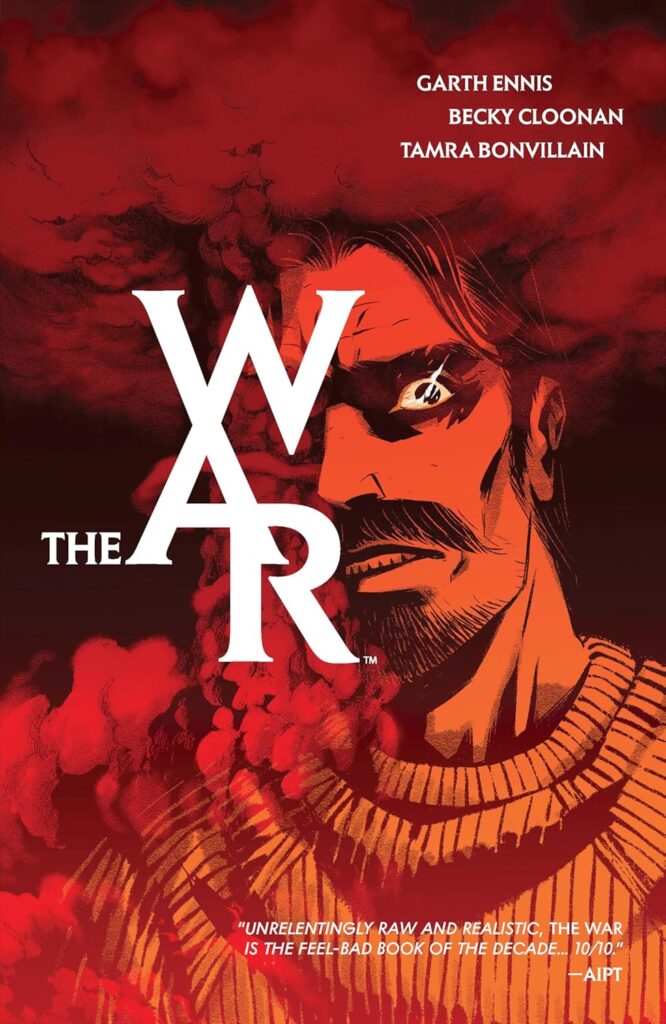
The War
Dammit, Garth. I was having a nice evening pretending we aren’t all a madman’s itchy trigger finger away from utter annihilation! The War is a completely uncompromising modern horror story that disintegrates the daily comfort of thinking nuclear war couldn’t happen because no one would be crazy enough to kick off mutually assured destruction. Garth Ennis and Becky Cloonan (alongside colors from Tamra Bonvillain and letters from Pat Brosseau) take us inside one group of NYC friends as the situation progresses from faux-intellectual party-fodder (can it really be a party unless a guy is mansplaining global war?) to European bombing to New York fallout. The scary part of course is not just that Ennis and Cloonan could bring something so bleak to life – and don’t let the bleakness make you think the work isn’t a page-turner – but that even the act of reading and writing about the graphic novel feels like an active coping mechanism for the threat’s terrifying reality.
Despite the reputation as a masterful shock-jock (Preacher, Punisher and especially The Boys on your resume will do that), Ennis’ last 15 years are full of nuanced, expertly designed war stories (Sara‘s my personal favorite), and some fascinating spectral horror (A Walk Through Hell remains an underrated work). Alongside the absurdly versatile Cloonan (fresh off the excellent horror of Somna), the duo is deliberately unrelenting in The War, largely avoiding sensationalized story beats (admittedly, the earned last page is a massive exception!) or really any feeling of a way out. Likewise, through a focus on fracturing or doomed relationships, the inevitably nihilistic conclusion maintains a troubling emotional core.
I hated how I felt after reading The War. And now you can too!
We’re Taking Everyone Down With Us
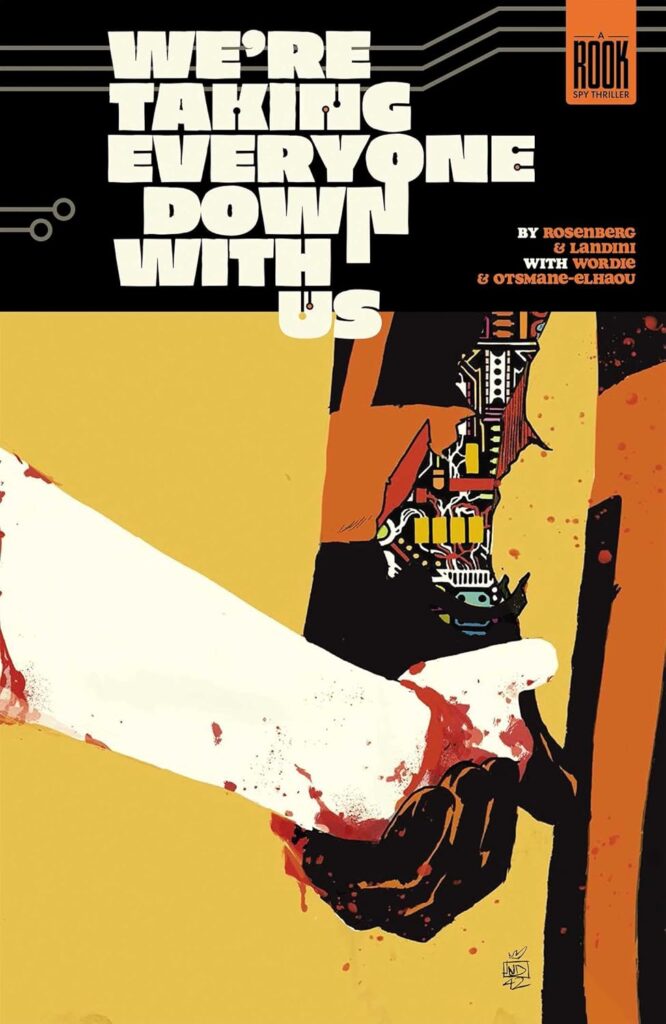
Matthew Rosenberg is on a heater. What’s The Furthest Place From Here with Tyler Boss remains one of the most underrated ongoing comics of the last several years, the adaptation of Four Kids Walk Into a Bank (also with Tyler Boss) is filming with Liam Neeson, and now Rosenberg launches his “Rook Spy Thriller” line with We’re Taking Everyone Down With Us, one of the best comics of 2026. Alongside Stefano Landini, Jason Wordie and Hassan Otsmane-Elhaou, the new 6 issue Image series follows Annalisse, a barely-teen girl raised on her father’s supervillain hideout island by robots and a doting Aflred-esque caretaker. When longtime Agent Rook goes rogue and attempts a capture, Annalisse and one of the bots are forced on the run in a world of superspies, supervillains, and SUPER COMICS (put that on the cover!!!).
We’re Taking Everyone Down With Us is surprisingly playful, balanced with Rosenberg’s humorous asides offering some needed self-awareness of all the absurdity abundant in a world of vampire-apes and supervillain cabals. Much like 4 Kids, though, Rosenberg and Landini are very good at discerning the right emotions and tone for the moment, effortlessly alternating between tortured but caring family dynamics, high-speed moving train escapes, and a roguish British spy cursing in ways I’d never imagined (Rosenberg must have gotten his master’s degree at The Ennis Academy For F*&#*& Lads). Landini mirrors some of Rosenberg and Boss’s preferred moves with gazillion-panel headshots breaking up key conversations, but mostly excels in his own right, particularly with character design. It’s amazing how quickly this camp-Bond meets Copra world of comics-fans tropes accelerates into its own captivating entity.
The plan for this world is intriguing, as the creators are taking a page out of the Brubaker/Philips playbook with a serialized approach of Rook Spy Thrillers. So instead of We’re Taking Everyone Down With Us issue #7, we’ll jump next to In Good Hands With Bad Company #1. I really like the approach for this particular project, as it leaves me wanting more from WTEDWU, but pragmatically not enough where I’m immediately dying for a whole volume two. Instead we’ll bounce out to another Rook story, and I’ll be there day one.
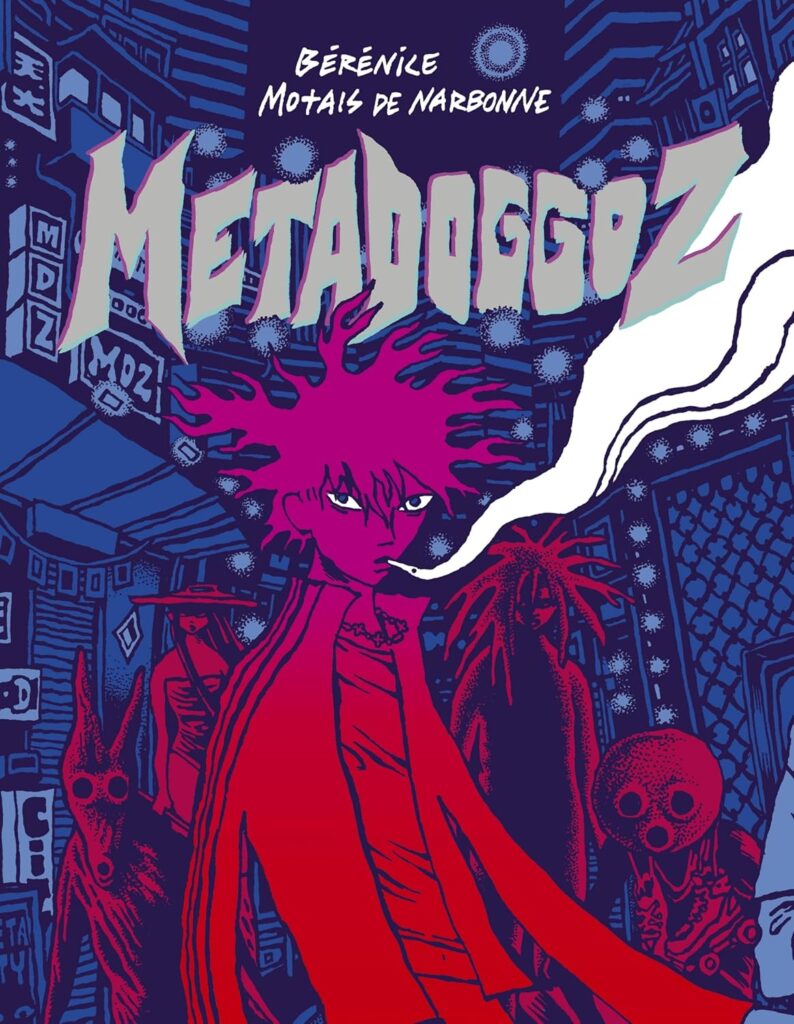
Easily the coolest graphic novel I’ve read so far in 2026, just oozing with style, for miles and miles (so much style that it’s waaaaasted!). Bérénice Motais de Narbonne’s Metadoggoz (originally published in French in 2023, and translated by Montana Kane for Drawn & Quarterly here) is a surreal cyberpunk explosion of cartooning excellence, channeling Taiyo Matsomoto’s Tekkonkinkreet and the anything-goes black-and-white ethos of Jim Woodring’s Frank. Narbonne’s metastation cities and gap-world creature designs are ferociously pure, rendered with a fearless density. Honestly, trying to color the work would send you straight to a therapist.
While I coasted on vibes for the book’s middle-act, Narbonne brings the work together in a satisfying conclusion of queer-punk outsiders finding their place, whether it was their intention or not. Found family can feel like an overused descriptor, but the purity of that goal is never diminished when it’s weaved this tightly in a genuinely fresh design. This is the graphic novel for anyone who loves shouting “Hell yeah, comics!,” for anyone who thought the third Matrix movie was really onto something, and for anyone who wants to see the future of the medium.

Shimazaki in the Land of Peace Vol. 1 – Vol. 8
Following the success of Way of the Househusband and Sakamoto Days, there’s a wave of manga imitators trying to capture the natural slice-of-life comedy and action that stems from “tough as nails action hero does normal life stuff.” As you’d expect with derivative creativity, it’s generally not as good. That’s what I expected of Shimizaki in the Land of Peace by Gouten Hamada and Takeshi Seshimo (Kondasha), a series set up to follow Shingo Shimazaki after 30 years captured and turned into the ultimate weapon by terrorist organization the LEL. Fortunately, Shimmy doesn’t want to be that kind of manga at all. It’s not even that Hamada and Seshimo can’t be funny – I’ve rarely smiled so broadly at a character’s attempt to make pour over coffee – it’s that they mash slice-of-life, action and the occasional wandering ronin genres into something wholly unique. It’s a pitch-perfect serious character study and look at a community of trauma survivors, bouncing in and out of tones with an almost unbelievably natural flow.
When Shimmy wants to do action, our lead transforms into El Nebulo and it’s the closest thing ongoing manga has to a John Wick. But then a chapter later, the creators comfortably slide into that same Wick saving a sandwich shop with his international knowledge. Again, there are cute funny moments, but largely it’s not played for laughs, it’s played for the development of Shimazaki fitting into a life devoid of constant violence. Naturally, that shadow lingers, as a web of espionage and LEL attempts to recapture their “asset” grow. It’s a remarkable work, intensely under the radar!
The Bugle Call: Song of War
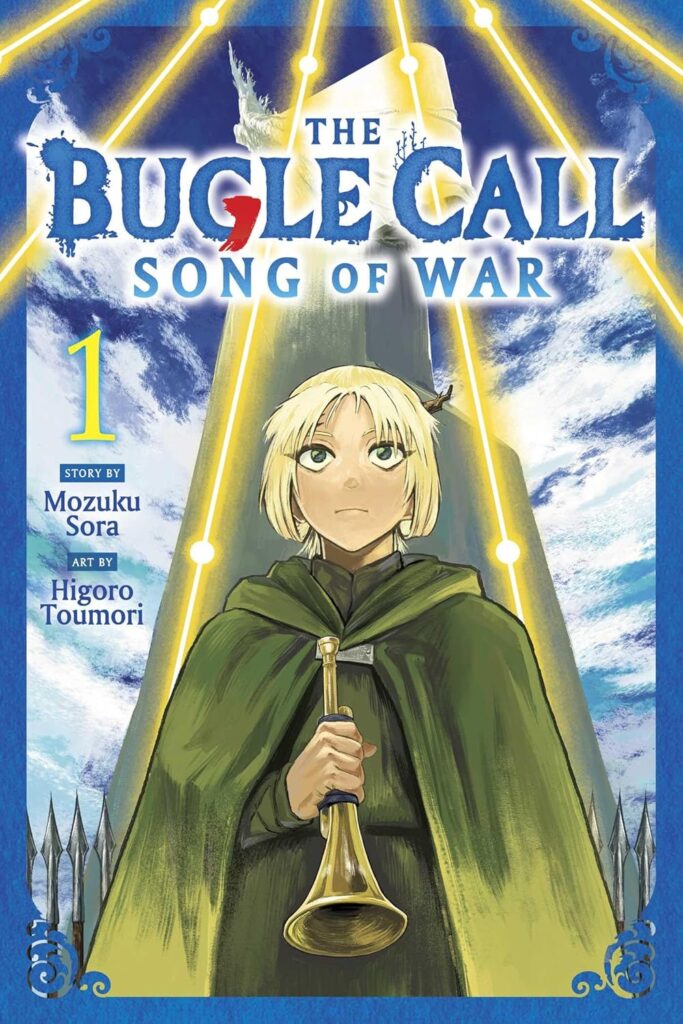
I’m trying to improve my manga credentials this year (some folks get advanced degrees as they approach mid-life. Not me! I make up credentials!), which led me down a fun rabbit hole exploring all the most interesting “new gen” 2020s manga (I smell a future CBH guide!). So far (and I’ve got a lot more reading to do!), the only book that knocked my hair off and my socks straight back is The Bugle Call: Song of War by Mozuka Sora (story) and Higoro Toumori (art). Fortuitously, the sixth Viz volume translated into English just hit stores, making it a perfect recommendation for the best manga of 2026.
As Sora and Toumori make fun in some back matter, The Bugle Call is *kind of* X-Force/Suicide Squad set in a medieval fantasy, but listen, if every comic with young people developing superpowers had to pay X-Men royalties, we’d never get anywhere (and X-Men would still owe Doom Patrol!). I am not prone to liking manga playing at the battle of Helm’s Deep (it often winds up feeling like… I could just go read more Berserk?), but somehow this book about the damn BUGLER alerting armies is the most compelling piece of superpowered action I’ve picked up this year.
For starters, the powered individuals – the Branched – are extremely compelling characters with uniquely portrayed abilities. Even in cases where I’ve seen this ability before – what’s up Mirror Master! – Sora and Toumori find fresh innovative ways to bring them to life. One character in particular – Zoe – has a powerset that gave me those Isca the Unbeaten feelings (my Krakoa heads know what I’m talking about!). Plus, the creative team are extremely smart about powerset synergies, combining seemingly minor gifts into unstoppable army destroying tide-turners. Of course, all of that isn’t worth much if Toumori doesn’t bring it all to life in captivating ways, and HOLY GUACAMOLE the Looking Glass v. Zoe fight in Volume Four! If you like meta panel explosions have I got a manga for you!
The Bugle Call: Song of War is my favorite ongoing manga right now, honestly even surpassing my long-running favorite Chainsaw Man as Fujimoto approaches the endgame there. This book rules. Check it out!
Absolute Batman Vol. 2 / Absolute Wonder Woman Vol. 2
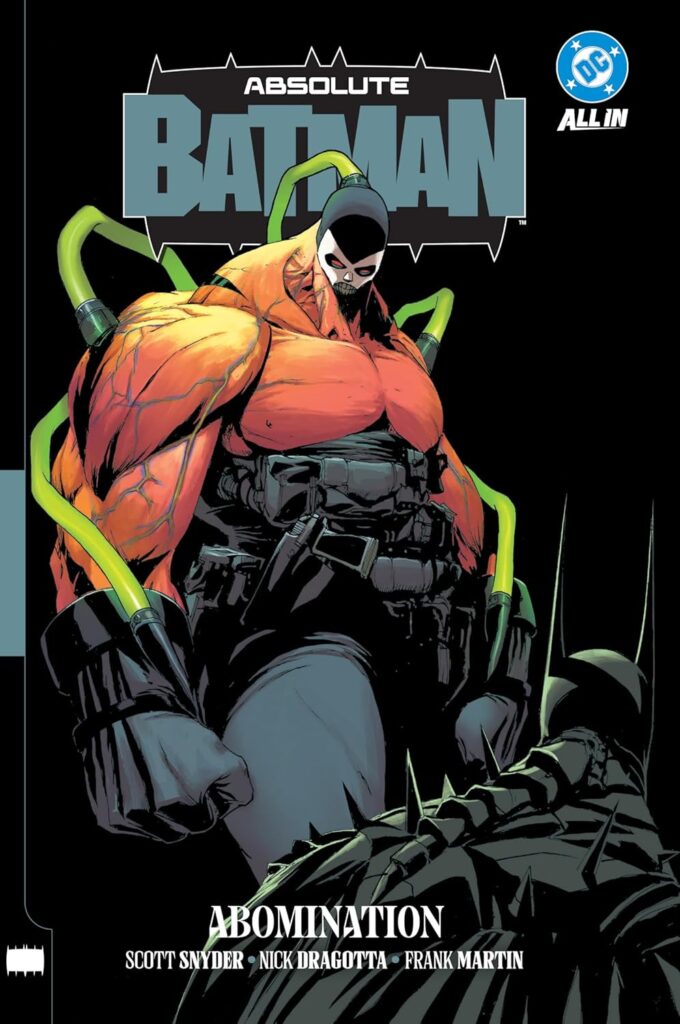
Ok, fine, since you’re being so PUSHY… I definitively declare my allegiance to Absolute Batman as my favorite Absolute DC comic (at least until Absolute Wonder Woman Vol. 3 makes me flip flop yet again!). Does it matter which one is subjectively *better*? Of course not. The point here is we have creators giving their all to just-fresh-enough spins on the ol’ super friends, with the editorial conviction to ensure the best artists working in superhero comics (Nick Dragotta and Hayden Sherman take all the bows) get to do *their* thing. It’s almost literally all I want from superhero comics in 2026. And then when there is a scheduling fill-in on Batman… it’s GD Marcos Martin! Be still my art!
One of the natural concerns with DC’s Absolute Universe is how long DC can keep it feeling vibrant and friendly to new/lapsed readers before it gives way to that all-too-familiar – looks over both shoulders to make sure MCU stans aren’t listening – fatigue. As these second volumes are hitting shelves Marvel’s Ultimate 2niverse is already on the way out the door! Typically, two to three years is the sweet spot for a shared universe or big idea (New 52, DC Rebirth, Marvel NOW, House of X / Powers of X) before the ideas start to run stale and the freshness wears off. I don’t expect the Absolute U to necessarily be any different. BUT that means we are right in the sweet spot of when this candy tastes the best – enjoy it!
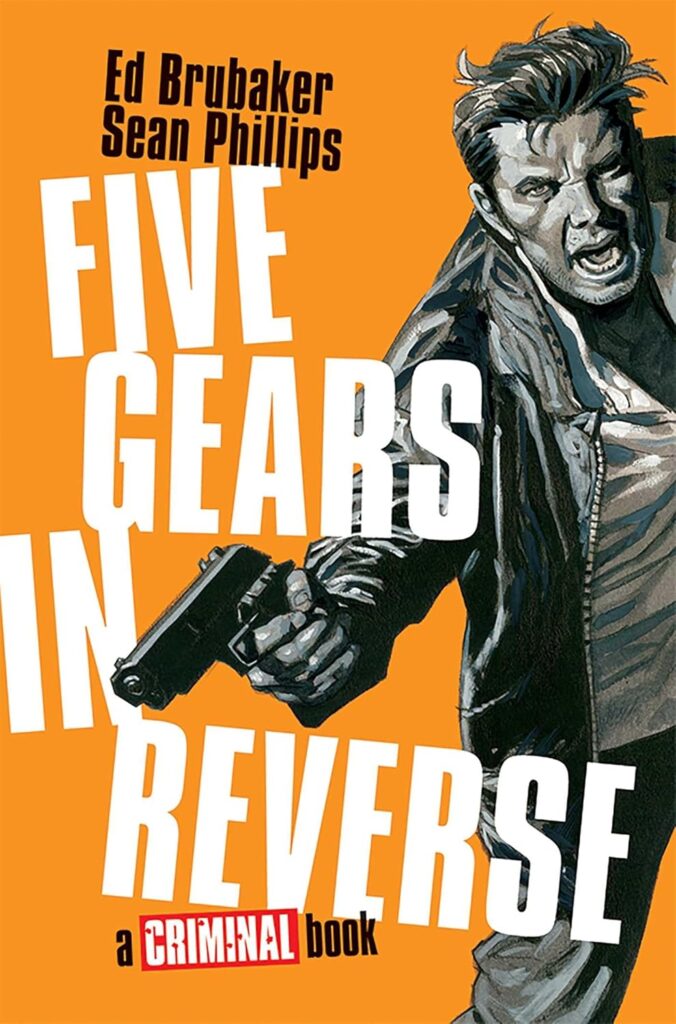
Criminal: Five Gears in Reverse
Ed Brubaker and Sean Phillips are first ballot comics hall-of-famers, probably the surest bet creative team of the entire 2000s, and Five Gears in Reverse, the newest graphic novel set in the Criminal Universe, is the hardest fastball they’ve thrown since Criminal’s return in 2019. These guys have the right to tell their stories however they damn well please, but hey, I’m pleased that heading into Criminal’s adaptation debut on Amazon Prime, they opted for hard, fast, Ricky Lawless crime, where you know every decision is going to be the wrong one, and if you’ve read the second volume of Criminal (“Lawless”) you know exactly what that means for Ricky. Brubaker and Phillip’s greatest trick here is I’m still half-wondering how the hell he walks away.
Five Gears in Reverse is classically tragic and violent noir, but it’s also richly humorous, particularly in the early going as Ricky botches his first job in ways that only “he has a heroin-whoopsie” can quite suggest. This is a prequel 20 years in the making (chronologically, the story is set 2 years before the Criminal Universe launched in 2006), and it’s truly unprecedented how consistent Brubaker and Phillips have been with all things Criminal during that stretch. Let’s be honest, most comics creators don’t return to their hits because things are going great, but with Brubaker and Phillips it always feels like the comics they were put on this earth to make. They can detour in all kinds of truly excellent ways (Fatale, Pulp, Reckless) but it’s Criminal where they’ve announced to the comics world for 20 years and counting that *this* is the creator-owned bar you should all aspire to.
Five Gears in Reverse is my favorite Criminal graphic novel of the 2020s. Long live Criminal!
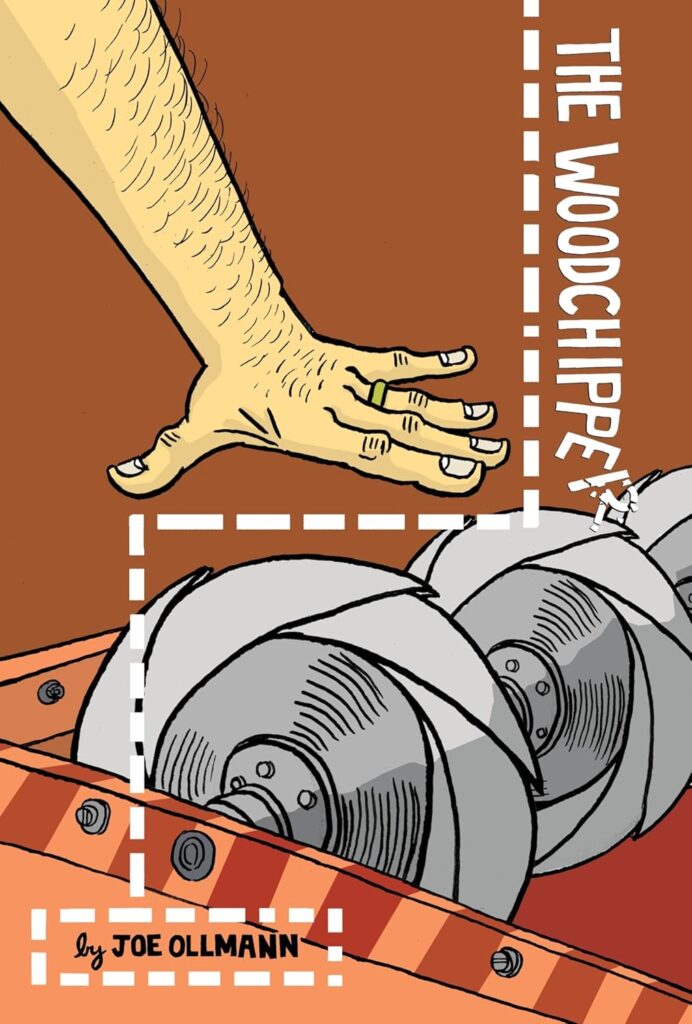
The Woodchipper
Joe Ollman’s new collection of short stories (5 stories, at a 9-panel a page pace essentially makes for 5 compelling graphic novellas!) shows just how far empathy for the inner lives of the average American can take a master cartoonist. In each of the five stories, Ollman dives headfirst into the heads of the working class, waltzing up to slightly sensationalized moments that – with one exception! – never even come close to escaping the bounds of reality. As the narrator puts it in the work’s first story, “The Woodchipper”, nothing actually happened. And yet. As we come to find in this story, the narrator’s whole life is upended, he’s unable to function near the sound of chainsaws or electrical equipment (quite essential for construction!) after he *nearly* turns on a woodchipper before checking and finding a dumb-as-rocks colleague with his hand in the equipment trying to get out his phone. Sure, nothing actually happened. And yet.
Elsewhere we meet a bookstore employee trapped in the office bathroom during Christmas or a landlord who discovers his rental property was the site of a brutal homicide. The scale and scope of the work is relatively small (we spend most of one story in a bathroom after all!) but the urgency of what these moments mean for each character are gripping. The lone exception is the collection’s middle piece, the longest of the five, centering a security guard for a highly questionable mega-corp that experiments on animals. The curiosity for the inner life of Kara is no less rich, but as Kara befriends the vegan animal rights protestors, the work builds to the most dramatic action (and reveal!) of any story here. It’s the only one of the five works that borders on the supernatural. And yet… maybe not. Like most of Ollman’s endings, no morals are overtly declared. It’s up to us to decide what just happened.
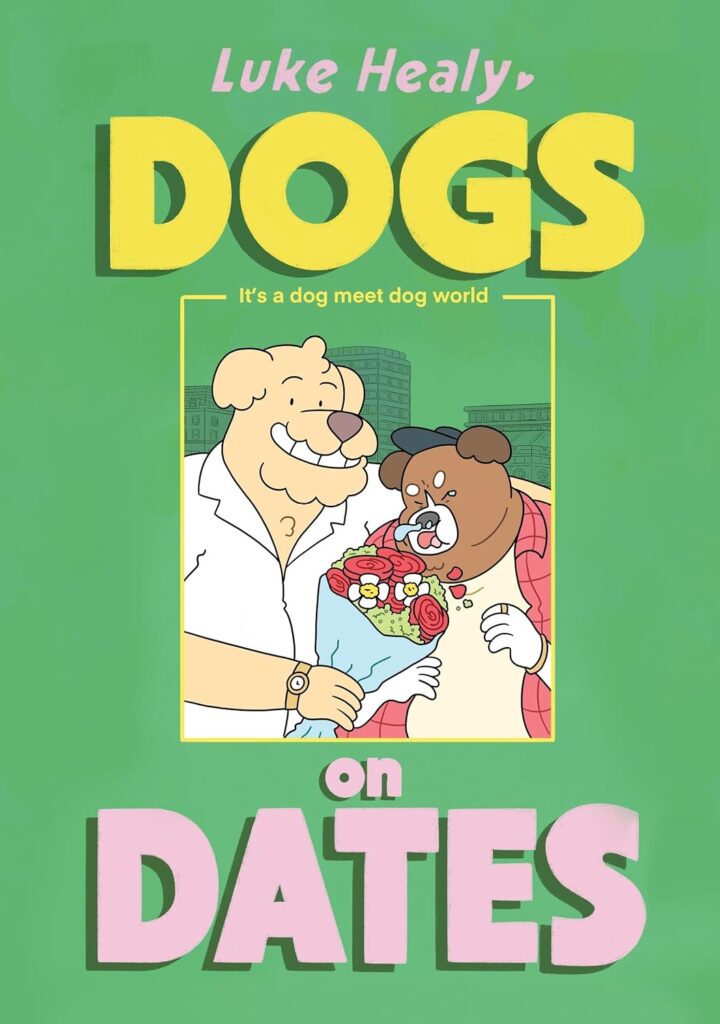
Luke Healy is my favorite comedy cartoonist working today. We talk all the time about how *hard* it is to sell comedy in comics, but Healy’s approach of believably absurd escalation, queer sass, and heartfelt characters makes it look easy every time. Self-Esteem and the End of the World was one of my favorite graphic novels of 2024, and Healy’s back at it again – this time with talking Dogs! – as Dogs on Dates is quickly one of my favorite works of 2026.
Honestly, the decision to make this a romantic-comedy with anthropomorphic dogs (I think just the Dogs talk, too… one of them has a Goat as a pet!) is its own piece of humor, as absolutely nothing that happens in these pages is specific to dogs. It’s purely a touching, hilarious and at times tense queer relationship, framed by counting our lead couples each and every date (with an emphasis, of course, on some of the more eventful ones). Healy’s a master at the demanding tradition of punchline-a-page newspaper strips, alternating here between single page vignettes and fully realized short stories where the humor can compound over time. The approach builds an astonishingly well-paced window into Brad and Bernie’s growing love.
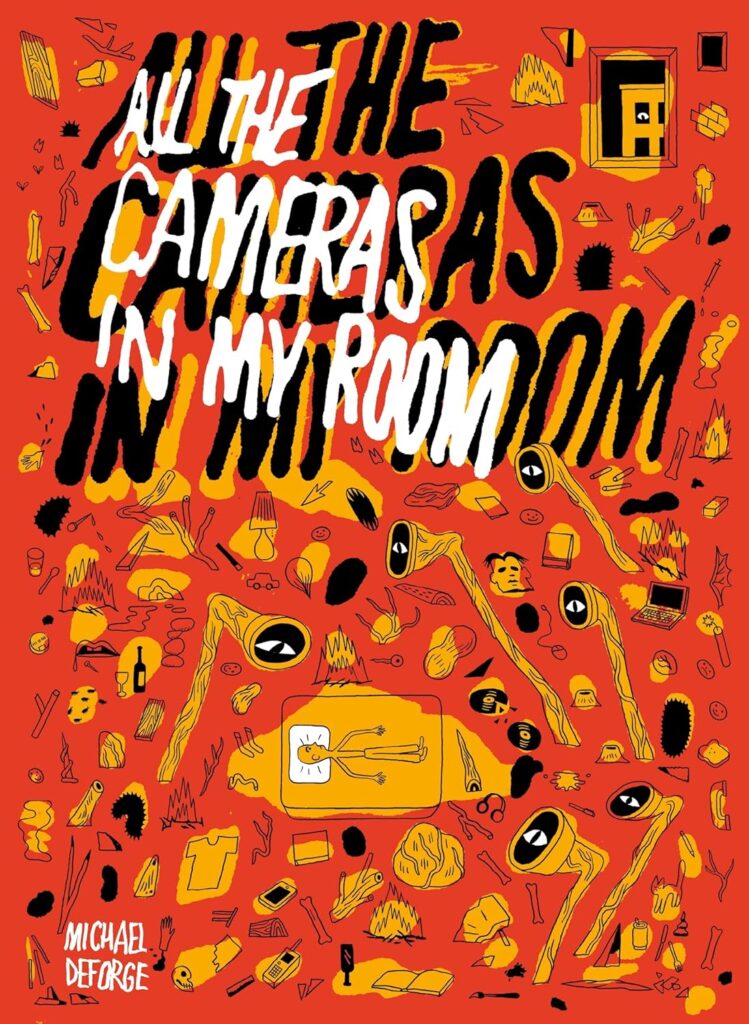
And now, a very special presentation of the most exciting thing in comics this year:
*Camera pans in slowly on bearded, rapidly aging man sitting softly on couch. He is holding an ice pack on a recently separated shoulder that occurred while playing basketball, this upon his return from a strained calf that put him in a walking boot. He considers whether he is too old to play competitive basketball, but then remembers, “I’m the same age as Steph and KD, and much younger than Lebron,” and is clear in his foolhardy pursuit of hoops nirvana. In his offhand he holds the new graphic novel from Michael Deforge, and opens the front cover.*
“What,” he exclaims masculinely to no one, as he finds a pocket inside the front cover that reads “The Spins,” with an arrow pointing up to a minicomic placed inside.
“WHAT!” he exclaims more shrilly now, as he pulls out the minicomic, which is inside a larger comic.
“LET’S GOOOOOOOOO!!!!” he screams, waking up the baby, as he begins to read Michael Deforge’s minicomic, “The Spins,” which is – and this cannot be emphasized enough – a small comic within a larger comic.
*Camera zooms all the way in on the man’s immaculate eyes and beard, both immaculate, the eyes and the beard, though it would seem excessive to label them both as such in the same sentence. One would not want to seem arrogant. The look on his face is pure, pure joy. The baby wails. His wife is saying something like, “Seriously, Dave?” Pure joy.*
This has been a very special presentation of the most exciting thing in comics this year.
I’ll also note that last year’s Holy Lacrimony was the push I needed to say I’ll read anything by Michael Deforge (it wound up inside my 15 favorite comics of the year). For my money, All the Cameras In My Room is even better, 14 short stories that range from weird, hilarious and insightful to hilariously weird yet insightful. This is my favorite graphic novel from Deforge to date, and it offers the fullest glimpse of the cartoonist’s unfettered vision.
To get these picks sent directly to your mailbox every month, sign up here for free.

HI Dave, don’t forget to add mine! ‘Fair With Forward’ it is non-fiction though so CAUTION 🙂