This month, I must again remind you DC’s Absolute Universe is COOKING, I’m reading A Confedarcy of Dunces the way literature intended (as a comic), and a few new graphic novels make it on to the best of the year!
To get these picks sent directly to your mailbox every month, sign up here for free.

To see the full year’s list, check out the best comics of 2026 (updated monthly!).
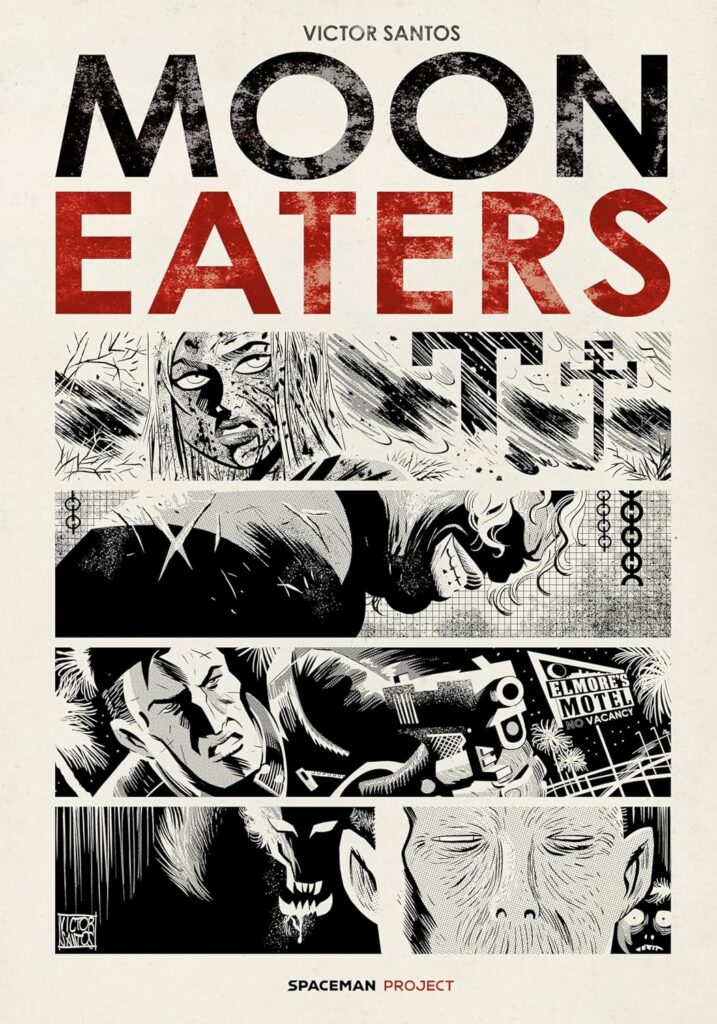
Is a little Frank Miller Sin City worship so wrong? Can’t a man simply give himself to sex, violence, and strange wolf cults?! Must a radio station carry anything other than AC/DC riffs turned up to 11?!!
Spanish cartoonist Victor Santos’ stylized black-and-white pulp flies across the page in this all-out non-stop action story of vaguely supernatural cults, ex-cons, and secret spies. Will it make you think? Absolutely not! Will it make you pump your fist? Absolutely! It’s just a grand big dumb good time delivered with utmost conviction – and who couldn’t do with one of those every so often?
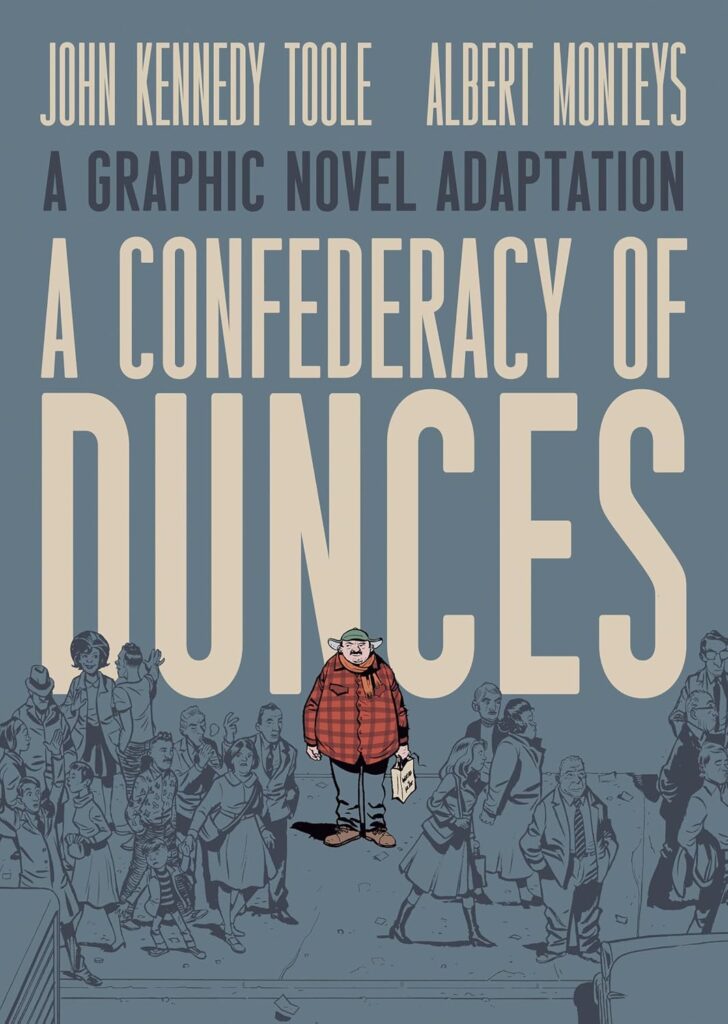
I’ve been on more of a focused novel reading kick this year, trying to knock out at least one a month, largely driven by the Jeselnik Book Club for picks that take me outside what I would normally try. While this has been rewarding, and led me to a new modern favorite in Fernanda Melchor’s Hurricane Season, it’s also clear that if Albert Monteys could simply adapt the world’s finest literature into graphic novels, I wouldn’t have to mess about with this whole “no pictures” thing. Coming off a truly eye-opening translation of Kurt Vonnegut’s Slaughterhouse-Five with Ryan North, Monteys is back with John O’Toole’s 1980 Pulitzer Prize winning A Confederacy of Dunces.
I’m finding my expectations for each of these back to back adaptations to be completely off base. For Slaughterhouse-Five – a book I’ve loved and know well (I’m sure you’re all familiar with my mid aughts high school essay on the tome!) – I expected the adaptation to feel redundant and unnecessary. Instead, I experienced the opposite – it was a wonderful, thoughtful and skilled way to re-experience a favorite story. With A Confederacy of Dunces, I figured because I had no preconceived notions heading in, that I would be entirely open to enjoying the story for the first time. And instead, I’m feeling like I might appreciate Monteys decision-making more if I’d read the novel previously.
While I am thoroughly enjoying Monteys work bringing O’Toole’s satirical comedy to life, it lacks the same wow factor as Slaughterhouse-Five. Unfair as it may be, this is the problem when you’re coming off truly excellent work. Whereas I rarely achieve anything, and the bar remains comfortably low! Monteys is a wonderful cartoonist, and this is an enjoyable way to experience A Confederacy of Dunces. I’d love to hear from those who know the work, though, and wonder if they’d feel the same.
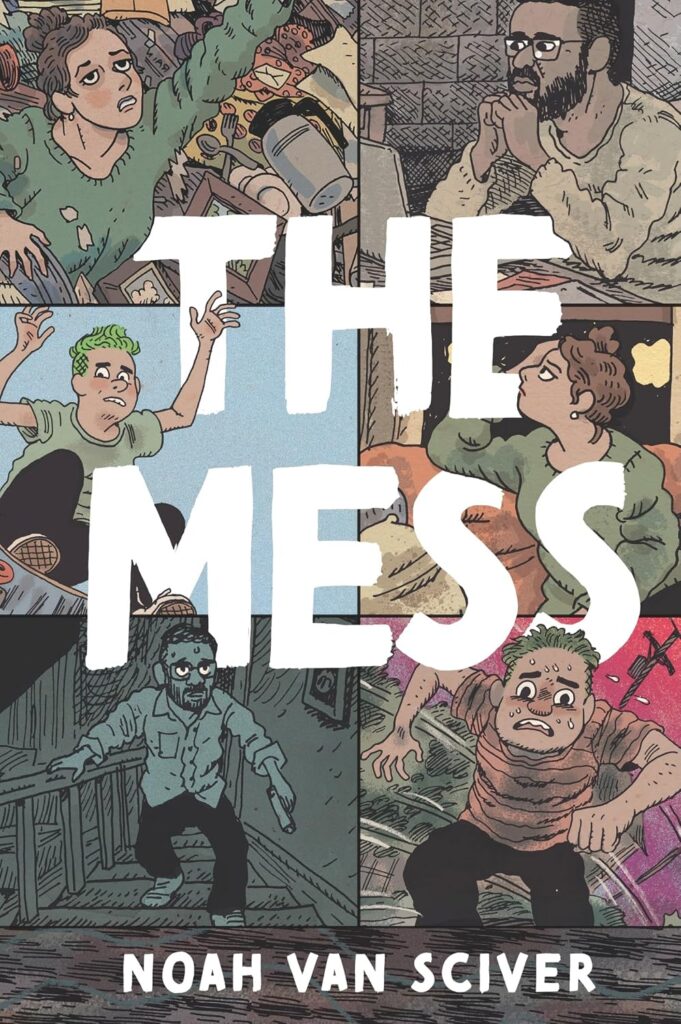
Noah Van Sciver’s Beat It, Rufus was one of my 5 favorite graphic novels last year, and the prolific cartoonist is back with a less comedic, more literary graphic novel from Fantagraphics. The Mess focuses on a mother and son searching through the wreckage of hoarder-grandpa’s house after he passes away, with hopes of finding an original Picasso drawing the Mom remembers her (estranged) father obtaining. It’s a treasure hunt through decay and bad memories, with the duo getting pulled into the web of their neighbors lives for the week they spend at grandpa’s.
NVS’s ability to bring character to life with lived-in reactions, impulses, and dialog is top notch, easily flitting between the comedic, the strange and the mundane. The Mess is downright Clowesian in its character studies, asshole skater twins, and haunted neighbor fixated on communicating with his murdered husband. It’s not as funny as Beat It, Rufus – nor does it want to be! – but The Mess is a satisfying, worthwhile one-sitting read.
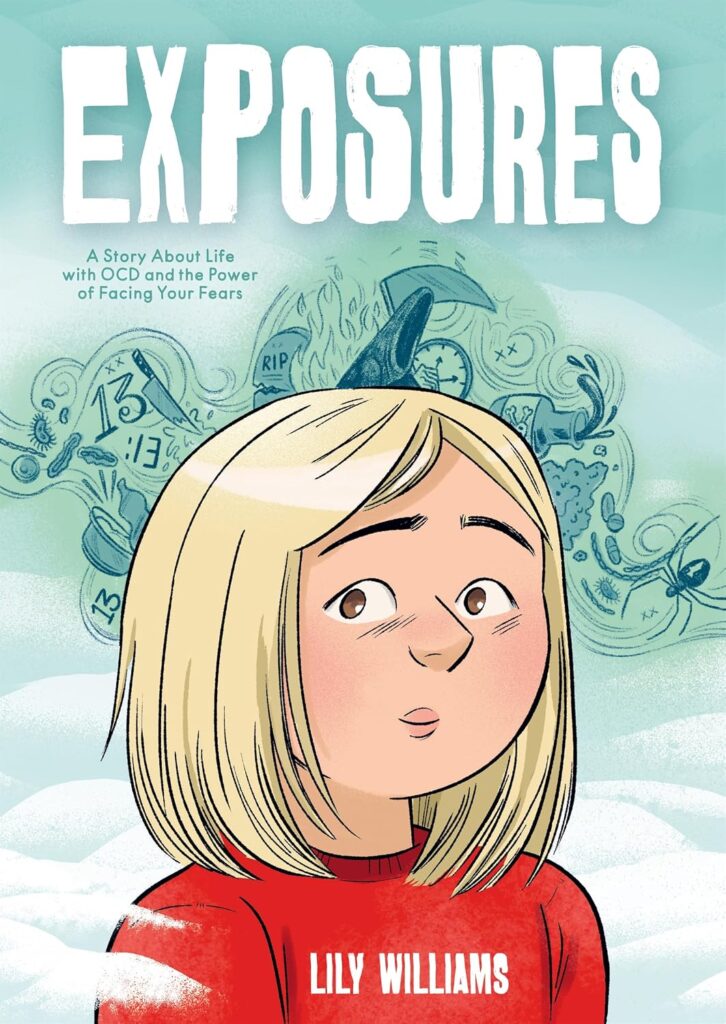
Lily William’s Exposures from First Second graphic novels is “A Story About Life with OCD and the Power of Facing Your Fears,” and it’s one of the more striking and remarkable works in the ever-blossoming explosion of Raina-inspired middle-grade issue-focused comics. It’s not my story to fully divulge, but I’ve recently seen a sliver of the impact of OCD on grade school kids, and reading Exposures felt both heartbreaking and hopeful in equal measure. Exposures captures in a lived-in experience of OCD, defining and educating what it’s like in ways I’d never fully come close to understanding.
Williams (who shares she was diagnosed with OCD as an adult) paints an unflinching, visually panic-inducing portrait of a young girl’s anxiety and OCD. This category of issue-focused middle-grade works can fall into a trap of cartooning stagnation, but not Exposures – Williams uses every tool at the disposal of a cartoonist to help you feel the spiraling, overwhelming, exhausting mental health challenges of the protagonist. It’s an extremely effective, compassionate window into OCD, highly recommended for parents or kids who want to better understand the condition and the therapeutic potential of exposure.
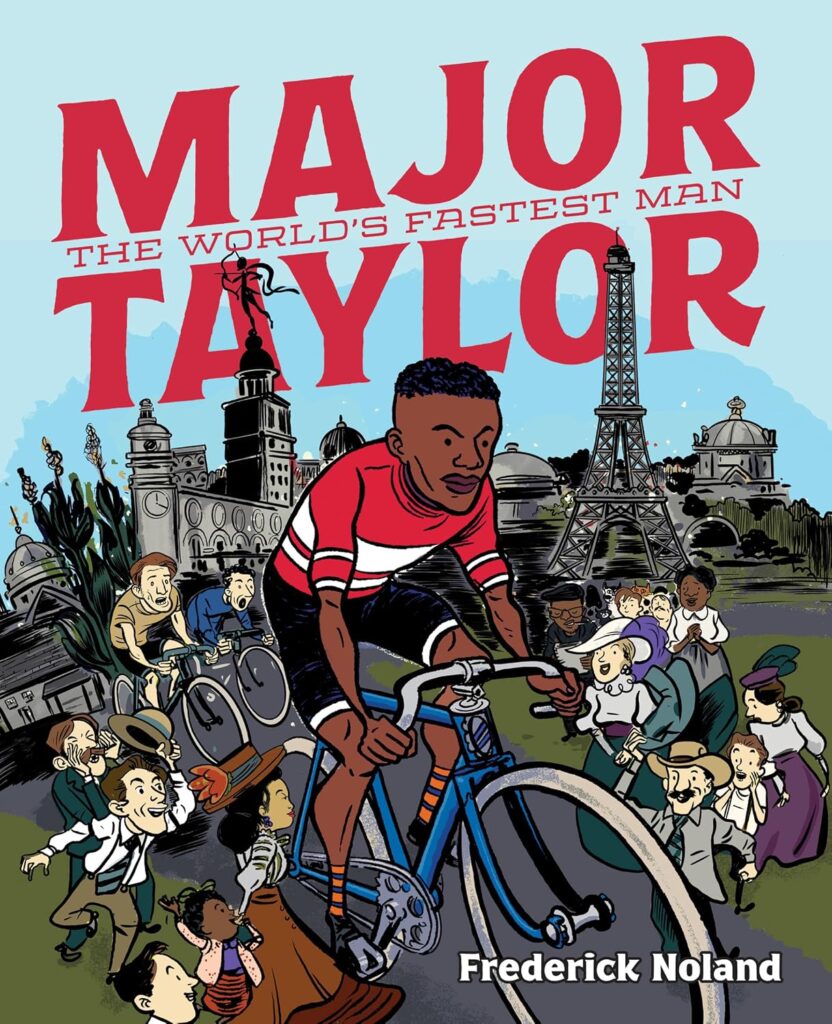
Major Taylor: The World’s Fastest Man
A beautifully cartooned biography of Marshall “Major” Taylor, an American midwestern black cyclist whose life (1878 – 1932) and bike-racing wins coincided with the rise of cycling as both mode of transportation and sports sensation. Cartoonist Frederick Noland blends brief, engaging histories of cycling (can you imagine a time *before* bicycles?) and the deeper focus on the regularly overlooked sensational career of Taylor. Competing a mere ~30 years after the Emancipation Proclamation and Juneteenth, Taylor found support in the cycling community, was occasionally exploited by that same support, and faced no end of violent, viscous racism. Through it all, Taylor rode faster, trained harder than anyone, and led an incredible sports career. A story well worth learning, told expertly by Noland.
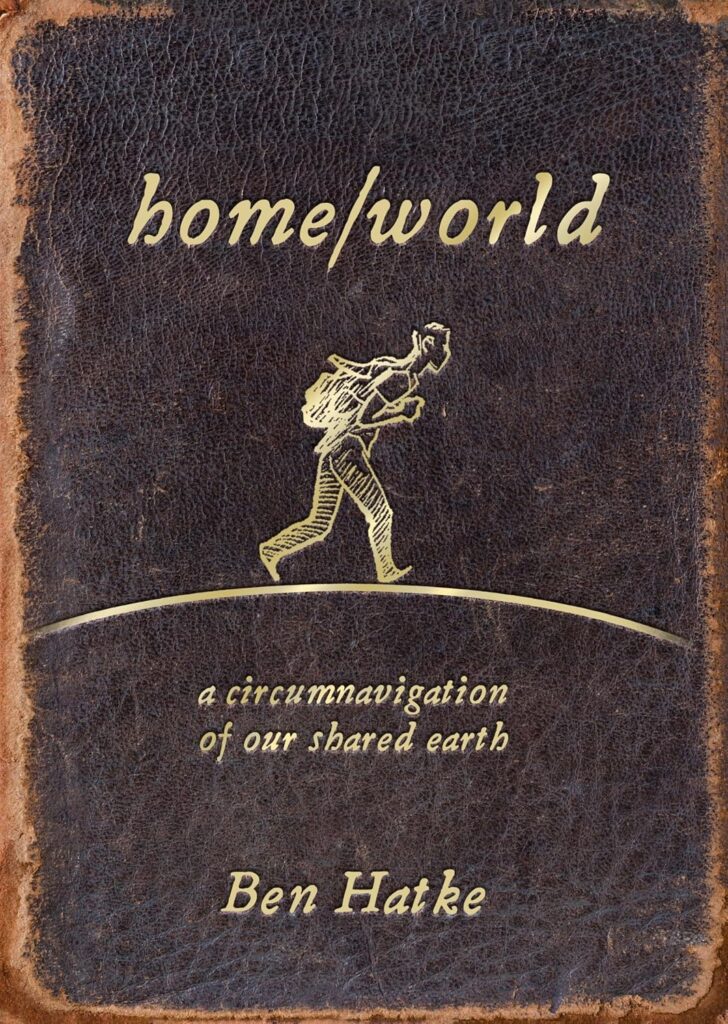
Ben Hatke is best known in my household as the cartoonist of the beloved Zita the Spacegirl comics. Hatke’s first published graphic novel memoir for adults, Home/World: A Circumnavigation of Our Shared Earth, follows the cartoonist’s unshakeable quest to quite literally travel around the world, like a modern Jules Verne character. Out now from 23rd Street Books, Home/World is a beautiful, thoughtful, fascinating physical act of journalism from Hatke, who spent 55 days *mostly* traversing the world the hard(er) ways.
The work’s opening is a strong look at Hatke’s history intrigued by the stories of Nellie Bly or Phileas Fogg, as well as the unbearable personal tragedy that, at least in part, spurs him on. I’ll admit, once Hatke got moving, I was very worried the graphic novel would devolve into “And then I saw Istanbul!,” a tedious – if delicately rendered – travelogue of an American man simply moving around the globe. Well, unfortunately for Hatke, but fortunately for us, the road gets significantly more challenging once the traveler hits Turkey. Hatke’s world travels are an intriguing blend of political and national anti-freedoms, and the almost boundless kindness of strangers the world over. Say what you like, but there’s little doubt in my mind that nobody worked harder for a good graphic novel this year than Hatke!
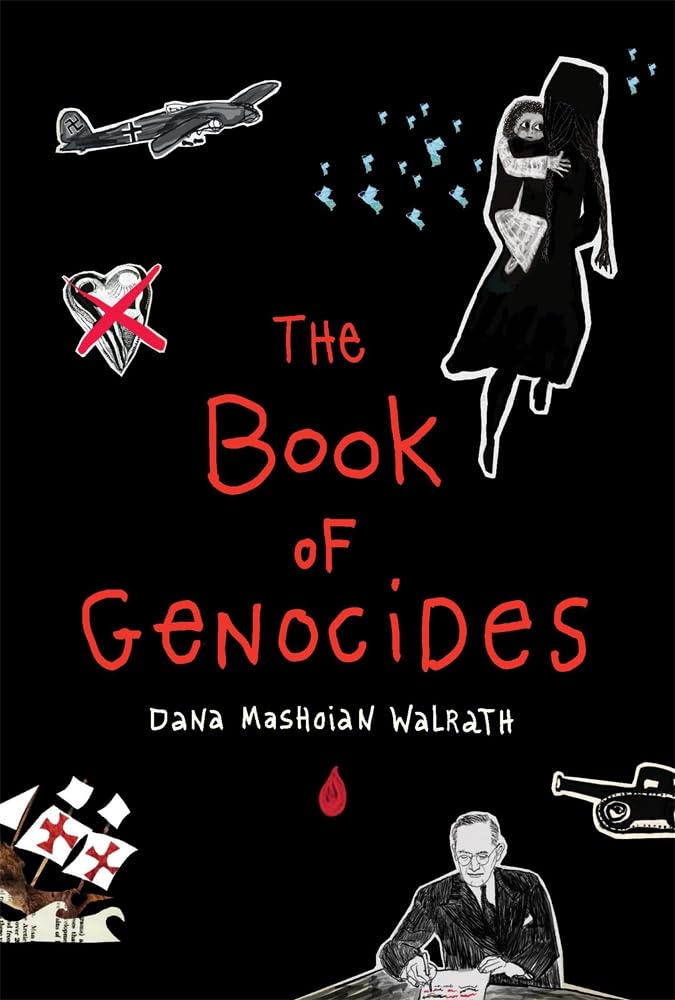
In terms of import, The Book of Genocides is by far the most significant graphic novel I’ve read in 2026. Dana Mashoian Walrath is a descendant of Armenian genocide survivors, and this ambitious work seeks to extensively define the act of genocide through 10 historical examples. Walrath’s histories are in-depth, fast-paced overviews of how the genocides were/are conducted, and the costs of human life, dignity and culture. Crucially, the work opens with an imagined conversation with Raphael Lemkin, the Polish Jewish man who escaped Poland in 1939, and went on to define the term genocide, and push for adoption of his Genocide Convention. For a term so freshly and hotly debated, it’s vital for Walrath to begin with a consolidated understanding of the term back to its source, and to be doubly clear that this unflinching work will not hedge bets about linguistic semantics.
Structurally, Walrath merges an inventive collection of abstract art, collage, and even cutouts to educate and emphasize the process of dehumanization at play through each example. This focal point is quite literally the foundation of the book, as Walrath applies her art and text over the top of her mother’s 1950s Duke University textbook on Zoology. As Walrath writes, the text reflects “the deep histories of medical experimentation and scientific racism that have accompanied genocide.” Every chapter ends with cutouts of human, animals, and insects with a child-like turn the flap approach that sells a sickening experience of blending the human into the beast.
It’s not Walrath’s aim, but a work so massive and broad misses the personal connection of a Maus, Barefoot Gen, or this year’s Armaveni. It’s a deliberate choice, echoing Lemkin’s question, “Why is the killing of a million a lesser crime than the killing of an individual?” Likewise, the sheer ambition is overwhelming. Consuming one horror through a personal lens can be gripping (for example, Joe Sacco’s Palestine); consuming all horrors through a historical lens really requires a focus I won’t pretend to have. It’s a set-it-down kind of graphic novel, again, by design.
It’s a strawman, but I suspect many reviewers would have the instinct to describe “The Book of Genocides” as a “hard read.” The history and present-day manifestation is horrifying, there’s no doubt. But Walrath has not produced a hard read. This is about as concise and direct a ‘fast track’ of genocide could be. And my engagement wasn’t notably different for sections where I’d studied the history (Black Americans, Jews in the Holocaust, Palestine) and where my historical awareness was deeply lacking (Aboriginal Australians, Cambodia, Rohingya). In any case, I learned a great deal, and felt the weight of Walrath’s efforts pull me to ground with shame, anger and revulsion. The Book of Genocides is an incredible addition to the comics canon.
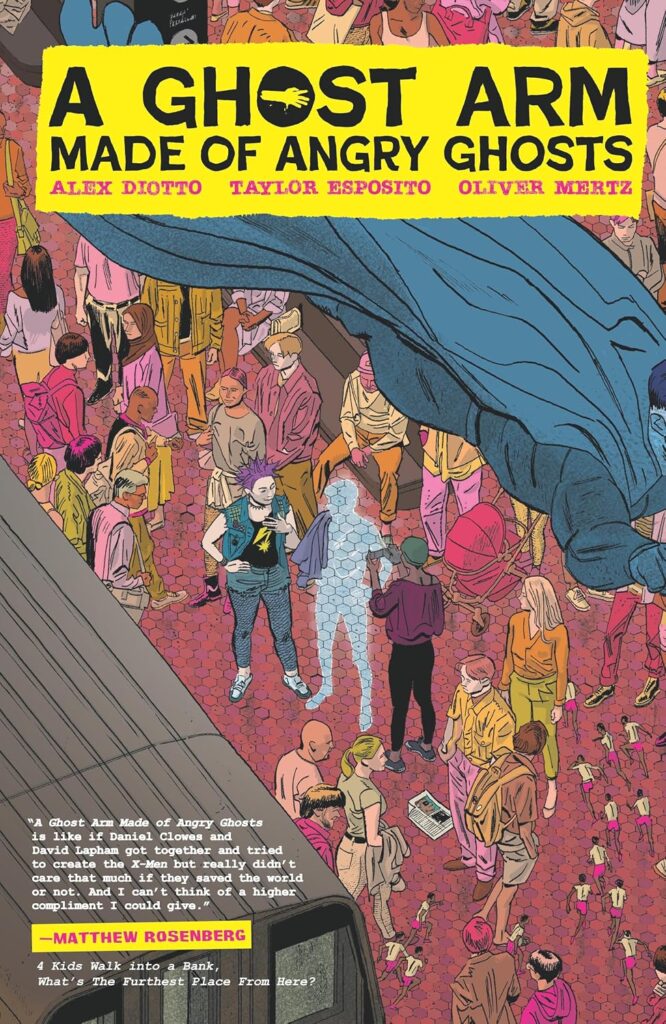
A Ghost Arm Made of Angry Ghosts
If nothing else, this is the most I’ve enjoyed a first issue of a comic book in 2026. Originally published in 2024, Oni Press is giving the hardcover treatment to this fantastic superhero subversion from Oliver Mertz, Alex Diotto and Taylor Esposito. It’s a laugh-out-loud funny Wes Anderson does Doom Patrol look at a world with rampant casual superpowers, and a trio of teens slowly caught up in a Powers-esque supes murder mystery.
Finding a fresh angle on superheroes is extremely difficult to achieve in 2026. I just picked up Knight City by Matt Kindt and David Lapham, and while the creators make something interesting – these are two comics masters, how could they not – I still couldn’t shake the overwhelming “been there done that.” It’s a bit Miracleman. It’s a bit “For the Man Who Has Everything.” It’s a bit familiar.
A Ghost Arm Made of Angry Ghosts overcomes that with instant tonal control, humorous charm, and most importantly, a near complete disinterest in superhero comics touchpoints!
The easiest knock on the work is that it wears its references too openly. The creative team is blatantly copying the Priest then Rosenberg/Boss use of “Darkseid Is” black-panel-white-text chapter break asides. On top of that, if you confused this for a Rosenberg/Boss book – visually, tonally, aesthetically – no one could pretend to be surprised. They’re not running from this – Rosenberg has an (absurdly good) pull quote on the cover – and as a fan of What’s the Furthest Place From Here?, more please. But I could see skeptics writing this off as imitation. There’s some quote about that, but what am I, Shakespeare?
For what it’s worth, there are key differences. For starters, Mertz’s flippant historical asides are a perfect blend of irreverent and oddly thoughtful. There’s also a perfectly controlled use of the medium to tell these cutaway histories and then inject hilarious modernized dialog below the deadly serious captions. But yeah, if you liked 4 Kids Walk Into a Bank, you might just love A Ghost Arm Made of Angry Ghosts. And if you didn’t like 4 Kids Walk Into a Bank, I have bad news for you about the possibility of us sharing any tastes!
Honestly, by the second half, I just found myself desperately hoping this book will continue (A Ghost Arm Made of, As It Turns Out, Even More Angry Ghosts 2). But for now I’ll just celebrate the win – this is one of my favorite graphic novels of 2026.
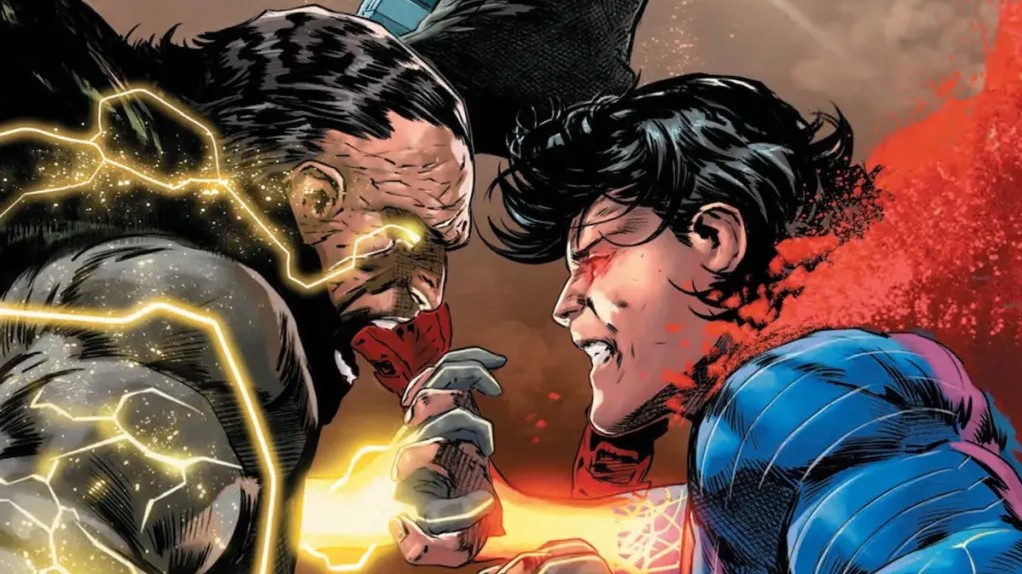
I don’t typically like to double dip on comics I’ve already recommended in previous monthly favorites, and three Absolute titles – Batman, Wonder Woman and Green Lantern – are already on my full 2026 year-end favorites. BUT, new volume threes of the launch titles are hitting shelves, and I completely caught up with the whole universe ahead of Absolute Batman #25. And y’all, DC’s Absolute Universe is a gift.
Given the history of shared superhero universes, I expected some shine to begin coming off around the 2 year / 25 issue mark, but instead the Absolute titles seem to only be getting better. This is unheard of. I mean, maybe you could make the case for Marvel’s OG Ultimate Universe, or certainly a single title like Invincible, but Absolute DC is pulling off improvement at scale, across seven current ongoing titles. Here’s how I’d rank the full universe currently:
The Best Superhero Comic of 2026
- Absolute Batman
Best Comics of 2026
- Absolute Wonder Woman
- Absolute Green Lantern
Really Good!
- Absolute Superman
- Absolute Green Arrow
I Need To See More
- Absolute Catwoman / Cassandra Cain one-shot
Thanks For Playing!
- Absolute Flash
That’s an incredible level of consistency for a superhero line that is breaking all the old rules in all the best ways. At this point, there’s no way you need me to make you aware of DC Absolute. I just want to talk about it! It’s so good! Hooray! Comics!

Leave a Reply