One of my most vivid memories is working hard to crack my parent’s cable TV lock password (shouts to 1234!) to catch 15 minutes of Silence of the Lambs. Perhaps it was the inimitable combo-scare that comes from trying to hide what you’re watching and one of the best horror movies of all time, but I only made it 15 minutes not because the movie ended, but because I was terrified. I don’t think I’ve handled horror very well ever since! (my parents just high-fived; that’s what I get for breaking their unbreakable locks!)
So no, I’m not a horror fan, and I’d rather snuggle a cactus than sit down to watch The Exorcist, but given the genre’s modern boom, I’m working my way in (Get Out was my speed! I’ve seen Halloween, The Thing, and Nightmare on Elm Street! I’m a big brave boi!). And comics have more than their fill of strong horror comics and graphic novels in the 2020s, although even I’ll admit, generating scares via comics is way harder than in tha pictures. Nonetheless, there are a number of significant comics creators taking the chills of the medium to new levels.
Below, you’ll find my 13 favorite horror graphic novels of the decade, in descending order with my absolute favorite listed last. There are some favorites of the decade – Chainsaw Man, Absolute Batman – that certainly have elements of horror, but I wouldn’t consider it their primary genre, so they’re excluded. Likewise, although real life can be significantly more terrifying than art, I’m not looking to sully the mood with the horrors of our histories. Instead, check out these great scary reads – I won’t even password protect the list!
Related:
Best Graphic Novels of the 2020s
Best Marvel Comics of the 2020s
Best Image Comics of the 2020s
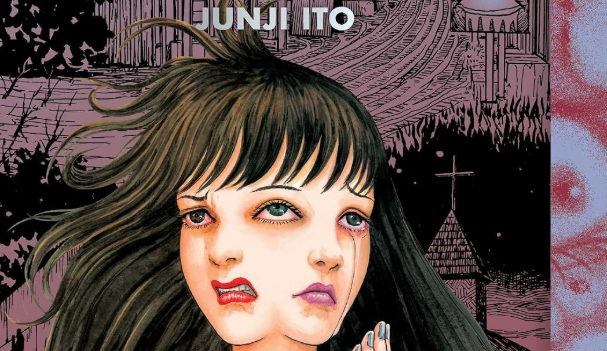
#13) The Liminal Zone
Obviously we have to start this off right with a 2022 selection of short stories from Junji Ito. Ito is to horror manga what Alan Moore is to superhero deconstruction, and as we progress into yet another decade of the masters career, there’s still nobody who draws a deranged maniac look quite like Ito. It’s that signature brand of skin-crawling weirdness where you know you should look away, but Ito’s immaculate, suffocating linework pulls you right into the abyss. Even decades deep into his reign, these bite-sized anthology strikes prove that our quietest everyday anxieties are only ever one page-turn away from full on nightmare fuel.

#12) Somna
Becky Cloonan and Tula Lotay are the latest to prove the peanut-butter/chocolate symbiosis of horror and erotica with Somna, a supernatural renaissance horror burning with demon-lust. This 1600s witch-hunt erotic folk horror is a gorgeous hardcover collection, with Cloonan and Lotay trading storytelling depending on the surreal nature of the scene (until, of course, the dreamworld and reality begin to collide and there’s no telling if the demon-sex is pure fantasy or hard reality). Somna is not subtle about its point-of-view on how male-dominated societies repress female sexuality for their own sad grasps at power, and it doesn’t need to be. The conversation is as relevant today as it was during a time when the new hot thing could be named Sigurd. It still takes a great deal of power and control to sell what makes this witchhunt different.

#11) The Summer Hikaru Died by Mokumokuren
An absolutely enthralling blend of horror, friendship, queer young romance and the supernatural. Imagine of Alice Oseman’s Heartstopper got really into less racist Lovecraft and you’re starting to get there.
The premise is lead character Yoshiki’s best friend (and maybe more) Hikaru died while on a mysterious sojourn up a magical mountain, but everyone but Yoshki believes Hikaru returned – not realizing his body is inhabited by a new supernatural entity. Mokumokuren walks a razor-thin balance between sweet, tender highschool hijinks and Junji Ito-esque unsettling cosmic horror. It’s a great looking, gloriously constructed story that subverts my expectations at every turn.
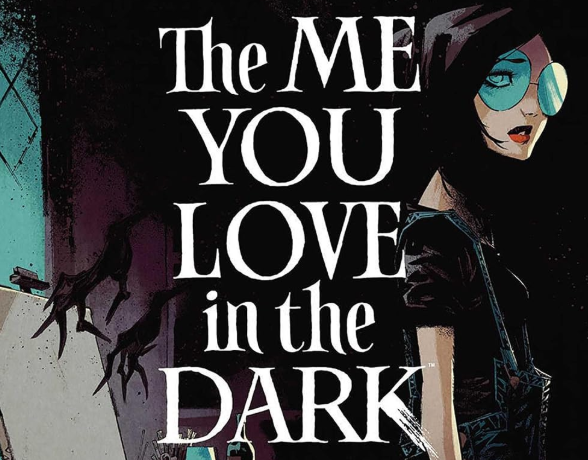
#10) The Me You Love In The Dark
For my money, Skottie Young’s best work, and yes, I’ve read Giant-Size Little Marvels. With Jorge Corona, Young takes the haunted house foundation, infuses dark romance and Faustian pacts, and creates a beautiful metaphorical look at the price of art. It lands as a remarkably resonant slow-burn, showing that the sinister muses we invite in to cure our creative loneliness might just end up consuming us whole.

#9) Putty Pygmalion
Impossible mash-ups of vintage photos, clay dogs, Misery-vibin’ root vegetables are like putty in Lonnie Garcia’s hands, in this story about a lonely nerd who (illegally) Frankenstein’s to life a companion made from misuse of an old children’s putty product. Imagine play-do creations could come to life, and a deeply sad individual used it to replace their roommate/crush! Narratively, there’s a great deal of Black Mirror tension in this poor creation infused with an adult-male consciousness but unable to leave the house for fear of being undone. Putty Pygmalion is truly excellent arthouse comic-making, and well worth your time.
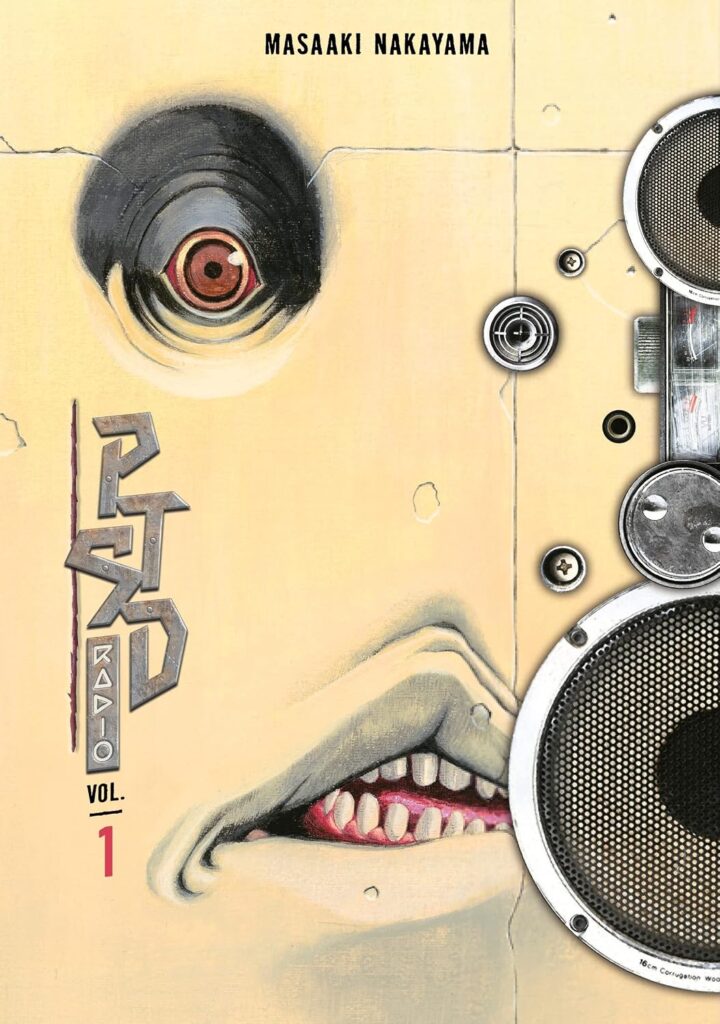
#8) PTSD Radio
I don’t think any manga has made me happier to be losing my hair since One Punch Man. Masaaki Nakayama takes the grand tradition of Junji Ito’s supernatural terrors seeping into common Japanese life events, and one-ups the scares with some of the best splash page or panel reveals in all of horror comics.
Structurally, PTSD Radio is fascinating too, broken into seemingly disparate but ultimately connected short stories of various characters impacted by the sinister hair god (that looks funny, but I swear, it’s terrifying!). Listen, Ito’s the GOAT, but so far in manga this decade, it’s Nakayama I most want to keep reading.

#7) Beneath the Trees Where Nobody Sees
Arguably the most shocking ascension to uber-popular best seller in indie comics, Patrick Horvath combines the warmth of small-town anthropomorphic forest creatures with the cold, calculating serial killing of Dexter. Except unlike Winnie the Pooh: Blood and Honey, Horvath is in complete command of the tone and pacing of the work, allowing it to traverse a read that is at once as charming as it is deadly mysterious.

#6) The Sickness
The Sickness is Lonnie Nadler, Jennie Cha and Hassan Otsmane-Elhaou’s black-and-white horror comic from Uncivilized Books, straddling two time periods, 1944 and 1954. The work follows the developing psychosis of a teen boy who believes he’s being followed by a shadowy figure, and begins seeing increasingly horrifying visages of twisted, monstrous faces everywhere he goes. A decade later, a psychiatrist finds a similar pattern of haunting mental illness following a woman’s murder of her own family.
Cha’s detailed lines, evocative expressions, and terrifying melting puddles of flesh all scream “don’t read after dark,” with an attention-to-detail and craft that at least enters the conversation with Barry Windsor-Smith’s Monster. It’s one thing to *want* to set out to make an instant classic; it’s another thing entirely to have the damn juice.
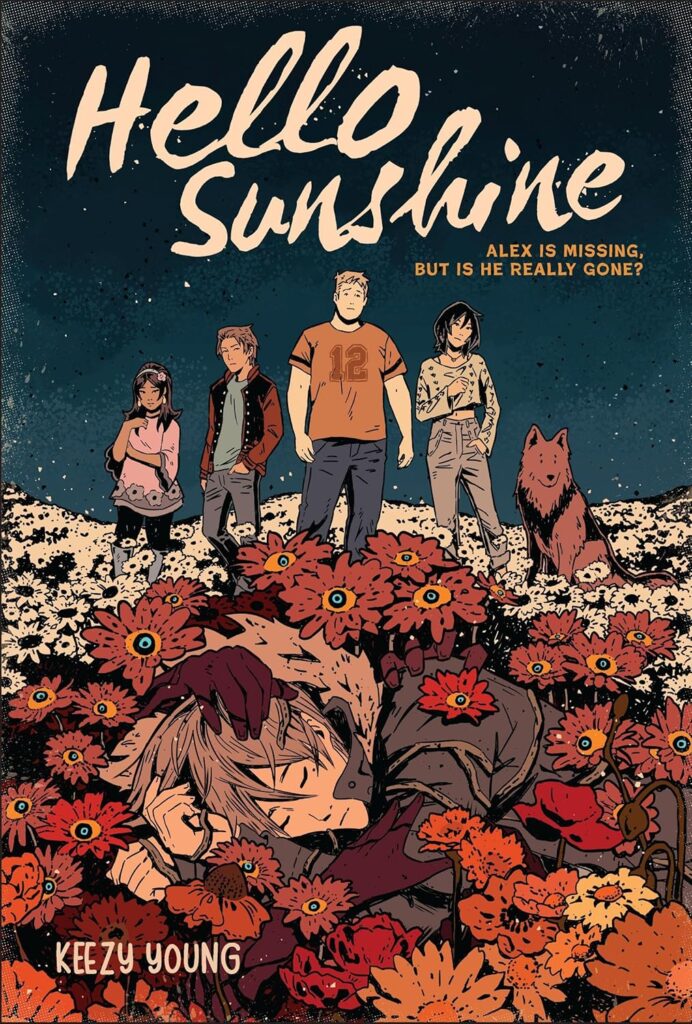
#5) Hello Sunshine
I knew I’d appreciate Keezy Young’s Hello Sunshine, but I was not prepared for the graphic novel to completely blow me away and seriously enter the best of the year conversation. Hello Sunshine follows 5 high school teens, with one chapter dedicated to each, as one of the teens, Alex, mysteriously goes missing. The remaining four – connected by friendship, family, and developing queer love – doggedly search to unearth what happened to Alex and whether or not he’s even still alive. it’s like what if Heartstopper met Hellblazer, but that only captures parts of Noah and Alex’s sweet romance, and the developing threat of various demons that may or may not be real.
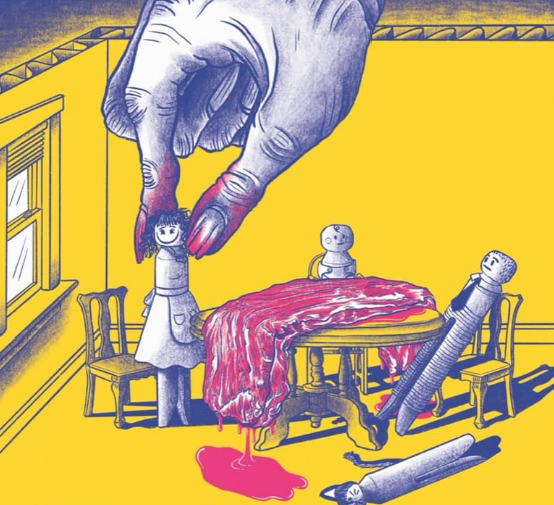
#4) Tender
Beth Hetland’s graphic Fantagraphics debut looked me directly in the eyes, crawled under the lids, and rooted around in the slimiest corners of my brain all night. If that’s a little too gross, Tender might not be for you! This astounding work combines modern social pressures, body horror, fever dreams, expectations, grief, eating cats, and trauma like nothing I’ve ever read. Ok, fine, that’s a pretty specific combination, but hot damn if it doesn’t work under Hetland’s carefully constructed nightmare.
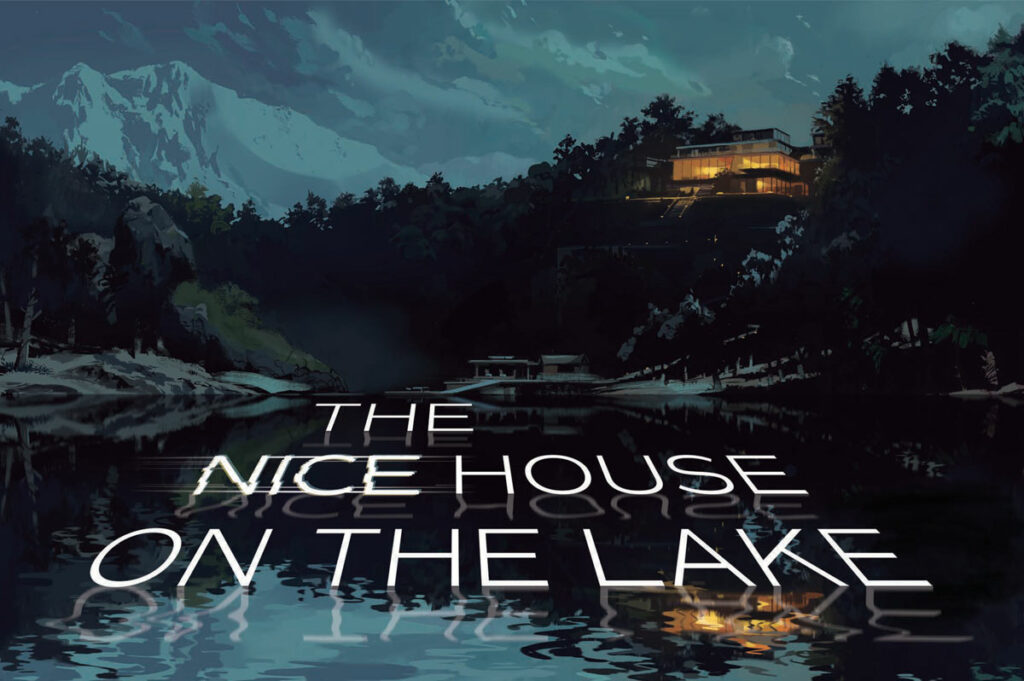
#3) The Nice House on the Lake / The Nice House By The Sea
At this point, James Tynion IV is effectively a horror institution unto himself. You could earnestly make a whole horror list of just Tynion works (The Deviant, Exquisite Corpses, Razorblades, etc would all have words!). The Nice House series may not be Tynion’s scariest work (for my money, that’s The Department of Truth) and it’s not even the most popular (That’s Something is Killing the Children), but it’s my favorite blend of apocalypse horror and mystery in modern comics.
The Nice House on the Lake by writer James Tynion IV with art by Álvaro Martínez Bueno and colors by Jordie Bellaire, poses a question: What if the friend at the center of your friend group, that person you’ve bared your soul to, or dated, or look up to, or all of the above; what if that person you trust is not who you thought they were, and might be something a whole lot more sinister than you could have ever imagined?
The end result is gorgeous, captivating, and dark. It doesn’t matter where you put that Nice House, it’s going to be among the best in horror comics.

#2) A Guest in the House
Emily Carroll is on another level. Works like Through the Woods and When I Arrived at The Castle are the kind of formally inventive modern horror comics that are almost without peer. Carroll’s blend of lush, unknowable horror, tense erotica, and innate sense of spatial variance makes her one of the most fascinating storytellers in all of comics.
So naturally, for 2023’s A Guest in the House, Carroll decided to level up.
This book grabs you by the shoulders and holds you underwater until you’ve finished, alternating between the repetitive mundanity of homelife and the shocking impossible expansion of the ethereal. Put less pretentiously, it’s a ghost story, and a damn good one. The work follows Abby, newly married to a successful dentist, and the mystery and legacy of the Dentist and her new stepchild’s mother’s death. Carroll’s much too clever to play this by-the-numbers, and by the end of the book it’s quite clear that the mystery is never the point at all! It’s a thrilling, scary journey tightroping across the wobbly foundations of sanity, and exactly the kind of book that demands an immediate second reading.
But that’s just the story! Carroll’s found an incredible balance here between the black-and-white familiar comforts of dinner with the family in front of the TV, and dreams of dragons, knighthood and ghosts that explode with viscera-reds and lady-in-the-lake glowing blues. Every page turn offers a daring reveal, every choice measured and no space wasted for effect. A Guest in the House just might be the best comic of the year.

#1) Ice Cream Man
Until another comic steps up and takes the title of best ongoing, it’s Ice Cream Man’s to lose, and its been that way for all of the 2020s. The biggest challenge for this brilliant genre-defying exploration of horror comics craft is finding a next level as W. Maxwell Prince, Martin Morazzo, Chris O’Halloran and team wade into issues 50 and up. What I value about Ice Cream Man above everything else is that if there’s a down issue, we’re still only one issue away from what may be one of my favorite single comics of any given month.
Within the framework of Ice Cream Man terror, there’s a true sense that this book can be absolutely anything, and Prince, Morazzo and company prove capable of pulling the frightening core out of any genre or scenario. The elements of Ice Cream Man that I find horrific, or haunting in more cases, are the unsettling human realities, not the supernatural scares. It’s the way Ice Cream Man paints the dissolution of a marriage, the uncertainty of fatherhood, and doubting the mere *possibility* of happiness that keeps me pondering the contents long after I’ve finished reading.

Leave a Reply